.png?width=140&quality=70)
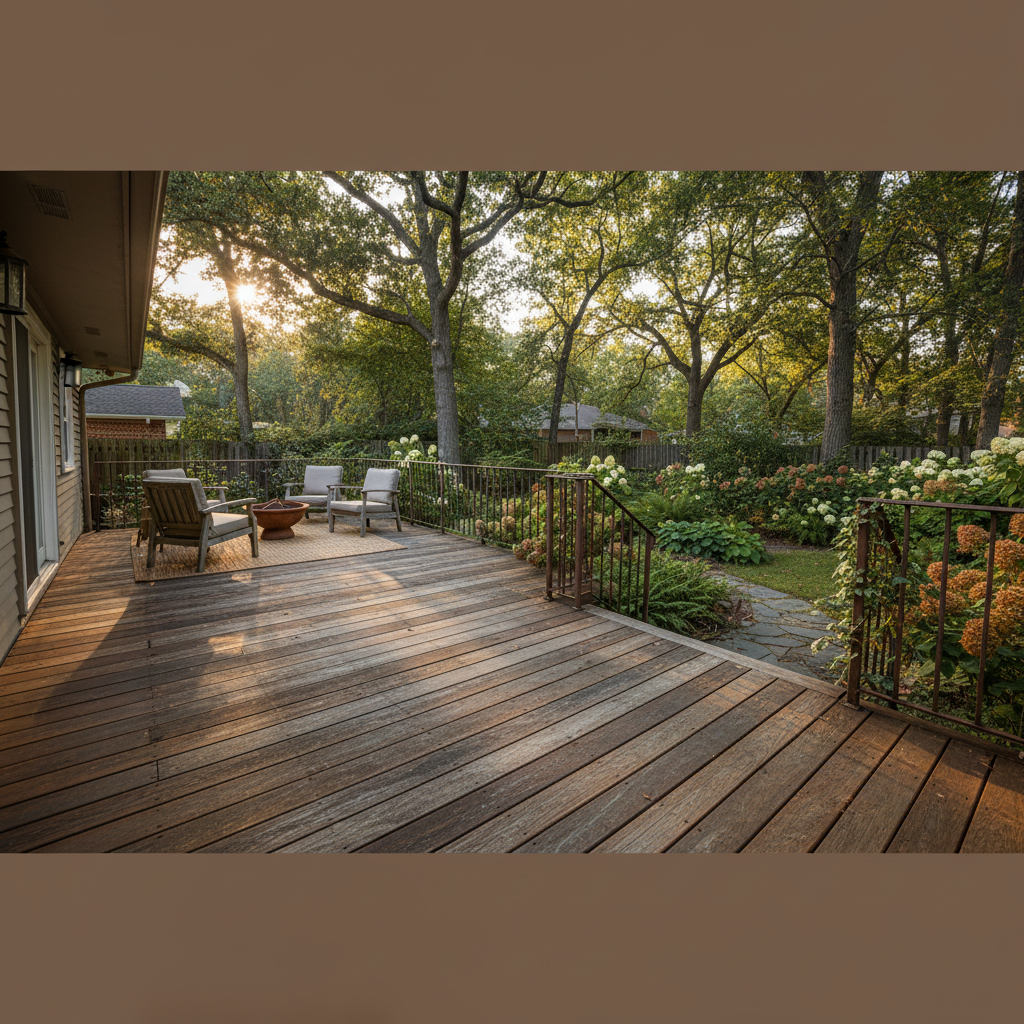
How Long Does Ipe Wood Last?
Understanding the Up to 75+ Year Lifespan
Ipe wood's legendary durability stems from a remarkable combination of biological properties that evolved in the demanding environment of South American rainforests. Research from the USDA Forest Products Laboratory and Mississippi State University Extension confirms these exceptional decay-resistance properties. With proper installation and care, Ipe delivers up to 75+ years of outdoor service—far exceeding any competing material. Understanding how application affects performance helps property owners maximize this extraordinary investment.
The Natural Properties Behind 75+ Year Performance
At 3,680 pounds per cubic foot, Ipe ranks among the densest commercially available hardwoods. This extreme density creates a cellular matrix so tightly packed that water, insects, and fungal spores struggle to penetrate. The wood's Janka hardness rating means it resists surface wear that would destroy softer species within a decade.
Natural oils saturate every fiber of Ipe, creating an internal moisture barrier that functions continuously without human intervention. These oils don't evaporate or break down under UV exposure the way applied sealers do. Instead, they remain chemically stable for decades, providing water resistance that actually improves as the wood ages.
Ipe's fire resistance approaches that of concrete, achieving a Class A rating without chemical treatment—a critical consideration for decks in wildfire-prone regions.
How Climate Exposure Affects Lifespan
Where you install Ipe influences how it reaches its full 75+ year potential. The wood thrives in full sun exposure, where rapid drying after rain prevents moisture accumulation. Shaded installations, particularly under dense tree canopy, create conditions where water lingers on the surface longer. This persistent moisture doesn't cause rot—Ipe's natural preservatives prevent decay—but it does accelerate surface weathering and may require more frequent cleaning.
Coastal environments introduce salt spray that can penetrate grain surfaces over time. Even here, properly installed Ipe outlasts alternatives by decades. Owners in coastal areas benefit from annual oiling and periodic freshwater rinsing to maintain appearance while still achieving exceptional longevity.
Freeze-thaw cycles in northern climates cause expansion and contraction that can stress fastener connections. Installations in severe winter climates benefit from stainless steel fasteners and slightly wider gap spacing—simple adjustments that protect your investment for 75+ years.
Ground Contact vs. Elevated Applications
The single most significant factor affecting Ipe lifespan is proximity to soil. The 75+ year benchmark applies primarily to elevated, ventilated installations where moisture cannot accumulate.
Deck boards installed with proper airflow underneath achieve maximum longevity. Maintain at least 18 inches of clearance from grade to allow air circulation that keeps the underside dry. Decks built lower to the ground or with enclosed skirting that blocks ventilation still deliver impressive performance but benefit from additional attention to drainage.
For posts and structural members, steel brackets that hold Ipe above grade eliminate ground-contact concerns entirely, ensuring your entire structure can reach that 75+ year service life.
Application-Specific Performance
Outdoor Decking
Faces the harshest conditions: direct rainfall, UV bombardment, foot traffic, and seasonal extremes. Properly gapped deck boards (3/16" to 1/4" spacing) allow rainwater to drain rather than pool. End-grain sealing at all cut ends prevents moisture wicking. These straightforward practices ensure Ipe decks routinely last 75+ years.
Siding and Fencing
Eliminates horizontal water pooling concerns. Rain-screen installation methods that create an air gap behind siding maximize the 75+ year lifespan. For fencing, Ipe boards in vertical applications will usually last a lifetime—the key is using steel post brackets to keep structural members above grade.
Docks and Marine Applications
Freshwater represents near-ideal conditions—elevated above water with excellent ventilation. Saltwater environments require marine-grade fasteners (Monel or silicon bronze) to match the wood's longevity, but Ipe itself handles salt exposure remarkably well.
Interior Flooring
Eliminates weather exposure entirely. Climate-controlled environments prevent the moisture cycling that drives outdoor weathering. Ipe flooring indoors will usually last a lifetime when sheltered from the elements.
How Ipe Compares to Other Decking Materials
| Material | Typical Lifespan | Maintenance Required |
|---|---|---|
| Pressure-Treated Lumber | 10-20 years | Annual sealing, frequent repairs |
| Cedar/Redwood | 15-30 years | Regular sealing, staining |
| Composite | 25-30 years | Periodic cleaning, cannot refinish |
| Aluminum | 60+ years | Minimal, but uncomfortable underfoot |
| Ipe Wood | Up to 75+ years | Optional oiling for color retention |
Pressure-treated lumber demands annual sealing and typically warps, cups, and checks over time. Cedar and redwood contain natural preservatives but lack Ipe's density and oil content, limiting their service life especially in humid climates. Composite decking resists rot but fades irreversibly and cannot be refinished. Aluminum lasts but becomes painfully hot in summer and lacks natural beauty.
Ipe requires no mandatory annual treatment. Optional oiling maintains the original rich brown color, but even without it, the wood remains structurally sound for 75+ years, gracefully weathering to an elegant silver patina.
The True Cost of 75+ Year Performance
Material selection improves dramatically when evaluated on cost-per-year rather than initial price alone.
Pressure-treated lumber might seem economical at installation, but divide that cost by a 15-year lifespan and add annual maintenance expenses—the true yearly cost often exceeds $1,000 for a typical deck.
Ipe's higher initial investment spread across 75+ years of service works out to roughly half that annual cost. The wood that costs more upfront costs far less over time, while providing unmatched natural beauty throughout its service life.
Installation Best Practices for Maximum Longevity
Reaching Ipe's full 75+ year potential requires attention to a few key details:
Proper Ventilation
Maintain adequate clearance from grade and avoid fully enclosed skirting.
Quality Fasteners
Use stainless steel fasteners rated for hardwood to resist corrosion over decades.
End-Grain Sealing
Seal all cut ends to prevent moisture from wicking into vulnerable surfaces.
Adequate Spacing
Allow 3/16" to 1/4" gaps for seasonal expansion and drainage.
Responsible sourcing from certified suppliers ensures you're getting mature, dense Ipe with maximum oil content—the characteristics that enable 75+ year performance.
The Bottom Line
Ipe wood's up to 75+ year lifespan isn't just a marketing claim—it's the result of extraordinary natural properties combined with proper installation practices. Whether you're building a backyard deck, commercial boardwalk, or interior flooring, Ipe delivers unmatched longevity and beauty that no other material can match.
Disclaimer: Lifespan estimates are based on industry research, manufacturer data, and real-world performance under typical conditions with proper installation and maintenance. Actual results may vary depending on climate, installation quality, maintenance practices, and specific application. The "up to 75+ years" figure represents optimal performance potential and is not a guarantee.