.png?width=180&quality=75&format=webp)
Learn more about red balau wood — species properties, sustainability, and care guide.
Why Choose Red Balau Decking
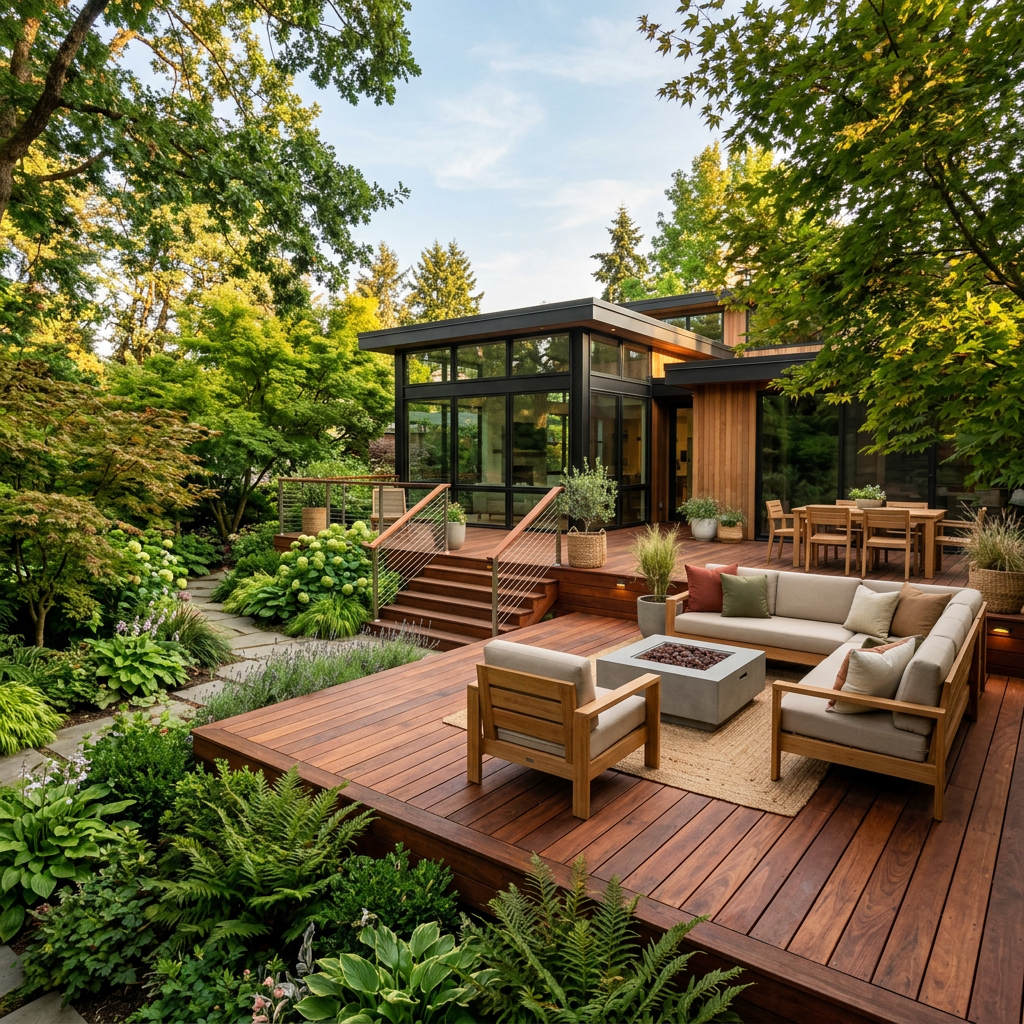
Red Balau decking offers a compelling combination of density, durability, and value from a sourcing region entirely outside South America. Harvested from the Shorea genus in Southeast Asia (primarily Malaysia and Indonesia), Red Balau provides an excellent hardwood decking option for homeowners and contractors who want geographic diversity in their material sourcing or simply appreciate the species' warm, inviting color and strong performance characteristics.
With a Janka hardness of 2,700 lbf, Red Balau is harder than Tigerwood (2,160), Garapa (1,650), and all domestic hardwoods. It sits firmly in the premium tier of decking species, delivering substantial scratch resistance, structural strength, and an up to 40+ year outdoor lifespan. The wood naturally resists rot, decay, and insect damage, earning a Class 1-2 durability rating and a Class A fire rating that meets demanding building code requirements.
The color of fresh Red Balau is a warm, uniform red-brown that falls between Cumaru's reddish-brown and Massaranduba's deeper red. This middle-ground color appeals to homeowners who want warmth without the dramatic variation of Tigerwood or the darkness of aged Ipe. Red Balau boards tend to have relatively consistent coloring, creating a cohesive deck surface. As with all hardwoods, the wood will weather to silver-gray if left untreated, or the original red-brown can be preserved with UV-protective oil.
Red Balau is particularly well-suited for residential decks, covered porches, and outdoor living areas where a warm aesthetic and solid performance are both priorities. Its moderate density (58 lbs/ft³) makes it somewhat easier to work with than ultra-dense species like Ipe or Massaranduba, while still providing excellent durability. The species has a long track record in Southeast Asian commercial construction, including boardwalks, bridges, and marine structures.
For homeowners comparing Red Balau to composite alternatives, the choice is clear: Red Balau offers natural beauty, longer lifespan, and better resistance to fading and heat absorption. Against pressure-treated lumber, Red Balau provides three to four times the lifespan without any of the chemical treatments that treated pine requires. Red Balau is harvested from managed forests with established sustainability protocols in Malaysia and Indonesia.
Red Balau Decking Specifications
| Botanical Name | Shorea spp. |
| Common Names | Red Balau, Selangan Batu |
| Janka Hardness | 2,700 lbf |
| Density | 56 lbs/ft³ |
| Durability Class | Class 1-2 |
| Fire Rating | Class A (ASTM E84) |
| Rot Resistance | Very Good |
| Insect Resistance | Very Good |
| Expected Lifespan | Up to 40+ years |
| Color (Fresh) | Warm red-brown |
| Color (Weathered) | Silver-gray patina |
| Available Thicknesses | 1x, 5/4, 2x |
| Available Widths | 4", 6" |
| Profiles | Pregrooved, Eased Edge (E4E), T&G |
| Origin | Southeast Asia (Malaysia, Indonesia) |
Available Red Balau Decking Sizes
Installation & Maintenance Guide
Red Balau Installation Tips
Red Balau requires pre-drilling for all fasteners. Use stainless steel screws to prevent corrosion. The wood works well with both face-screw and hidden fastener installation methods. Pregrooved boards are available for clip systems. Standard 16" joist spacing is recommended. Allow boards to acclimate before installation.
- Pre-drilling required for all screw holes
- 16" on-center joist spacing for standard residential installations
- Stainless steel fasteners required — no galvanized or zinc-coated
- Acclimate boards on-site before installation
Maintenance Options
Oil for color: Apply UV-protective oil annually to maintain the natural warm red-brown tones. See our red balau deck maintenance guide for product recommendations.
Let it gray: No treatment needed — Red Balau will weather to a beautiful silver-gray patina with zero impact on durability.
How Red Balau Compares
Red Balau vs Ipe
Ipe is harder (3,680 vs 2,700 Janka) and longer-lasting (up to 75+ vs 40+ years), but costs more and comes only from South America. Red Balau provides solid premium performance from a Southeast Asian sourcing alternative.
Learn more about Ipe deckingRed Balau vs Cumaru
Cumaru is harder (3,330 vs 2,700 Janka) and lasts longer (50+ vs 40+ years). Both have warm reddish-brown tones. Choose Red Balau for geographic sourcing diversity or Cumaru for maximum South American hardwood value.
Learn more about Cumaru deckingRed Balau vs Tigerwood
Red Balau is harder than Tigerwood (2,700 vs 2,160 Janka) with a more uniform color. Tigerwood offers dramatic visual stripes. Choose based on whether you prefer consistent color (Red Balau) or dramatic pattern (Tigerwood).
Learn more about Tigerwood deckingRed Balau Decking FAQ
All Red Balau Decking Sizes & Profiles
Every available red balau decking product — click to view pricing and details.
Explore More Decking
All Hardwood Decking
Browse all species
Ipe Decking
Shop ipe decking
Cumaru Decking
Shop cumaru decking
Tigerwood Decking
Shop tigerwood decking
Garapa Decking
Shop garapa decking
Massaranduba Decking
Shop massaranduba decking
About Red Balau Wood
Species information & properties
All Hardwood Species
Compare all species