.png?width=180&quality=75&format=webp)
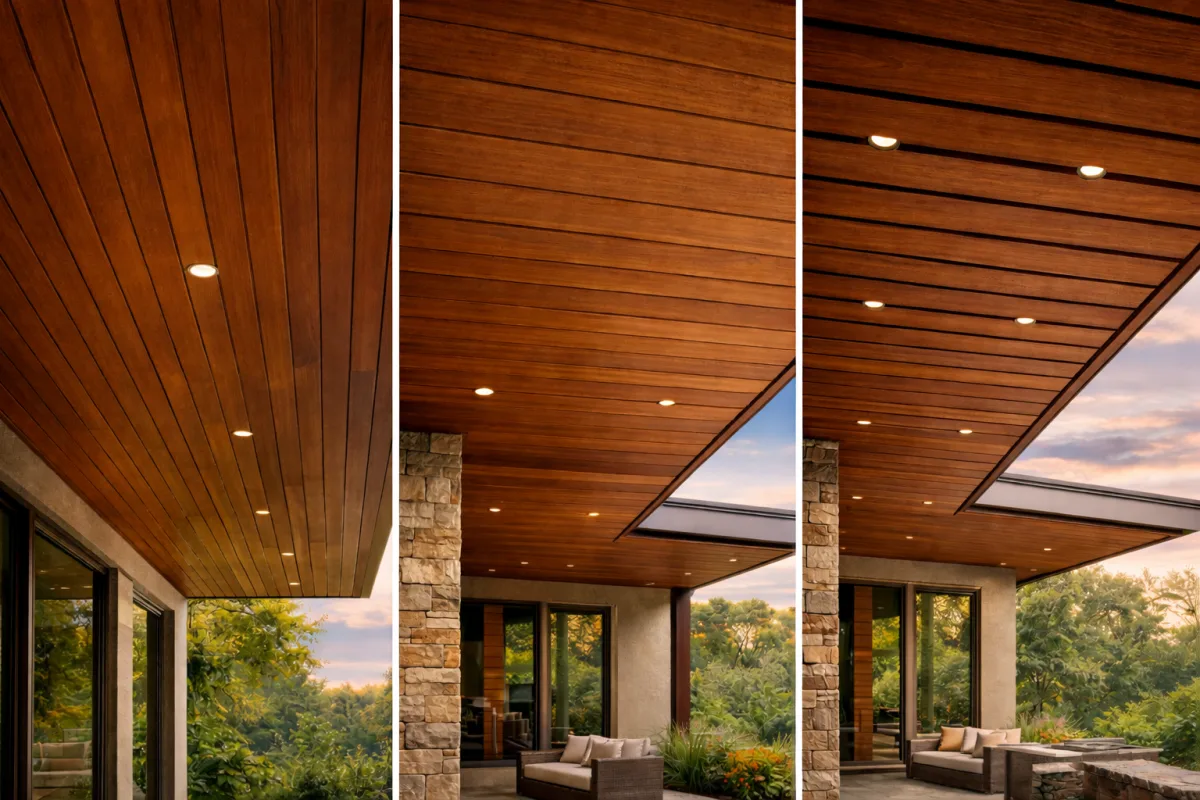
Ipe Soffit & Porch Ceiling
The gold standard for porch ceilings — Ipe tongue and groove delivers unmatched density, a warm chocolate grain overhead, and a proven track record of up to up to 75+ years without repainting.
Janka Hardness
3,680 lbf
Lifespan
Up to 75+ years
Fire Rating
Class A
Profiles
T&G, Shiplap, Rainscreen
Why Choose Ipe for Soffit & Ceilings
An Ipe soffit transforms any covered outdoor space into a showcase of natural luxury. When guests step onto your porch or patio and look up, they see the rich chocolate-brown grain of Brazilian walnut — a ceiling material so distinctive it immediately elevates the entire property. Ipe tongue and groove ceiling boards interlock seamlessly to create a flush, gapless surface overhead that radiates warmth and craftsmanship.
Ipe porch ceiling installations are the gold standard among architects and high-end builders. The wood's 3,680 Janka hardness means Ipe soffit boards won't dent from ladders, won't soften from humidity swings, and won't degrade from the temperature cycling that breaks down lesser materials. In a protected soffit environment — shielded from direct rain and UV by the roof above — Ipe performs even better than in fully exposed applications, easily lasting up to up to 75+ years without replacement.
What makes Ipe T&G ceiling especially striking is how the wood grain appears from below. Soffit is one of the few applications where you view the wood from underneath, and Ipe's tight, interlocking grain pattern creates a visual depth that vinyl, aluminum, and painted pine simply cannot replicate. Each board tells a story of density and natural oils, with subtle color variation from olive-brown to deep chocolate that gives the ceiling character without the busy look of cheaper materials.
The Brazilian walnut soffit requires zero painting, zero staining, and zero chemical treatment for structural performance. Left untreated, Ipe soffit weathers slowly to a silver-gray patina — an elegant, intentional look that many architects specify. For those who prefer the original warm brown, annual UV oil application preserves the color beautifully. Either way, you'll never scrape peeling paint off your porch ceiling like homeowners with pine or cedar installations do every few years.
Ipe soffit boards carry a Class A fire rating (ASTM E84), the highest available — identical to steel and concrete. For overhead applications near rooflines, this fire safety margin is critically important. An Ipe porch ceiling won't contribute to fire spread, won't melt like vinyl, and won't warp like aluminum under heat. It's the safest premium ceiling material available.
Whether you're finishing a covered porch, a pavilion ceiling, an outdoor kitchen overhang, or eave soffits around your entire home, Ipe soffit boards deliver a visual and performance standard that no other material can match.
Soffit Profiles Available in Ipe
Tongue & Groove
Interlocking boards create a seamless, flush ceiling with no visible gaps. The gold standard for premium porch ceilings and soffit installations.
Best for: Porch ceilings, soffits, pavilions
Shiplap
Overlapping boards with a clean shadow line between each piece. Modern, defined look with subtle depth and character.
Best for: Modern aesthetic, accent ceilings
Rainscreen
Open-joint system with built-in ventilation channels. Modern architectural look with functional airflow for vented soffit applications.
Best for: Vented soffits, eave ventilation
Common Applications for Ipe Soffit
Porch Ceilings
Covered porch and veranda ceilings. T&G is the most popular profile for this classic application.
Eave Soffits
Underside of roof eaves and overhangs. Protects rafters and adds curb appeal to every side of the home.
Pavilion Ceilings
Open-air pavilions, gazebos, pergola ceilings, and covered outdoor living spaces.
Outdoor Kitchens
Ceiling above outdoor cooking and dining areas. Hardwood adds warmth to the cooking experience.
Commercial Canopies
Hotels, restaurants, retail overhangs and entry canopies. Premium aesthetic for commercial properties.
Carport Ceilings
Covered parking and breezeway ceilings. Transforms utilitarian structures into architectural features.
Ipe Soffit Specifications
| Botanical Name | Handroanthus spp. |
| Common Names | Ipe, Brazilian Walnut, Lapacho |
| Janka Hardness | 3,680 lbf |
| Density | 69 lbs/ft³ |
| Durability Class | Class 1 |
| Fire Rating | Class A (ASTM E84) |
| Rot Resistance | Excellent |
| Insect Resistance | Excellent |
| Expected Lifespan (protected exterior) | Up to 75+ years |
| Color (Fresh) | Olive-brown to dark chocolate-brown |
| Color (Weathered) | Silver-gray patina |
| Available Thicknesses | 1x, 5/4 |
| Available Widths | 4", 6" |
| Available Profiles | T&G, Shiplap, Rainscreen |
| Origin | Central & South America (Brazil, Bolivia, Peru) |
Installation Tips for Ipe Soffit
Install Ipe soffit boards perpendicular to support framing with 16-24 inch joist spacing. Blind-nail T&G boards through the tongue for a clean look with no visible fasteners overhead. Pre-drill every hole with carbide-tipped bits. Use 316 stainless steel ring-shank nails or screws. Seal all cut ends immediately with end-grain sealer. Allow boards to acclimate on-site 7-14 days before installation. For porch ceilings, consider running boards along the length of the porch for the best visual flow. Soffits weather much more slowly than exposed surfaces since they're protected from direct sun and rain — oil finishing is optional and purely cosmetic.
Ipe Soffit vs. The Alternatives
| Feature | Ipe | Vinyl | Aluminum | Pine/Cedar |
|---|---|---|---|---|
| Appearance | Rich natural wood grain | Plastic, generic | Industrial, metallic | Natural but limited |
| Lifespan | Up to 75+ yrs | 15-20 yrs | 20-30 yrs | 10-20 yrs |
| Maintenance | None required | Wash | Wash | Paint/stain every 3-5 yrs |
| Fire Rating | Class A | Melts | Non-combustible | Not rated |
| Durability | Extremely hard | Brittle, cracks | Dents | Soft, prone to rot |
| Curb Appeal | Premium | Low | Low | Moderate |
| Eco-Friendly | Yes — natural | No — plastic | Recyclable | Yes — natural |
Ipe Soffit vs Vinyl Soffit
Vinyl soffit looks generic and institutional. Ipe soffit delivers genuine hardwood grain, Class A fire rating (vinyl melts), and a up to 75+ year lifespan versus vinyl's 15-20 years. For any project where appearance matters, there is no comparison.
Ipe Soffit vs Cedar Porch Ceiling
Cedar porch ceilings need repainting every 3-5 years as the finish peels and cracks overhead. An Ipe ceiling never needs paint, is over 10 times harder (3,680 vs 350 Janka), and lasts 3-4 times longer. The upfront investment pays for itself in zero maintenance.
Ipe Soffit vs Cumaru Soffit
Cumaru soffit delivers 90% of Ipe's overhead performance at a lower price. In a protected soffit environment where weather exposure is minimal, the practical performance difference is small. Choose Ipe for the ultimate premium or Cumaru for best value.
Learn more about Cumaru SoffitIpe Soffit FAQ
All Ipe Soffit Sizes & Profiles
Every available ipe soffit product — click to view pricing and details.
Explore More Soffit
All Hardwood Soffit
Browse all species
Cumaru Soffit
Shop cumaru soffit
Tigerwood Soffit
Shop tigerwood soffit
Garapa Soffit
Shop garapa soffit
Massaranduba Soffit
Shop massaranduba soffit
Red Balau Soffit
Shop red balau soffit
About Ipe Wood
Species information & properties
All Hardwood Species
Compare all species