.png?width=180&quality=75&format=webp)
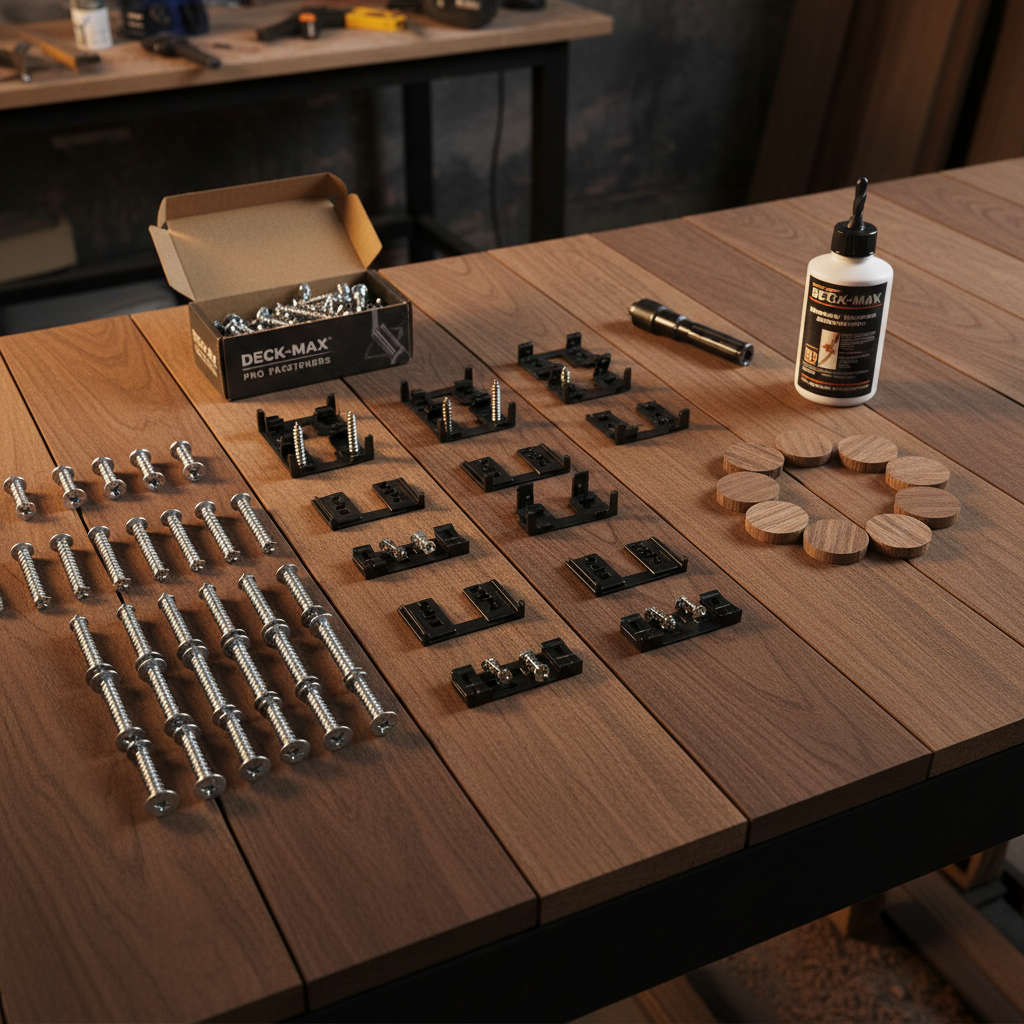
Face-Screw vs Hidden Deck Fasteners & Ipe Clips — Complete Guide
Understanding how to properly secure tropical hardwood decking is critical to long-term performance. This guide compares face-screwing, plugged installations, and hidden deck fasteners (including Ipe clips) for Ipe and similar exotic hardwoods.
Ipe is not pine. It's not composite. And it doesn't behave like treated lumber. The fastening method you choose has a direct impact on long-term stability, visual appearance, and how much movement your deck experiences over its lifespan.
Tropical hardwoods like Ipe are incredibly dense (often 3x denser than pressure-treated pine), naturally oily, and prone to seasonal dimensional change—especially in width. This means your fastening system must accommodate movement without allowing boards to cup, warp, or pull away from the substructure.
The wrong fastener—or the wrong installation technique—can cause splitting, surface staining from rust, and structural failure within just a few years. This page walks through the three core methods and explains when each one makes sense.
Why Tropical Hardwood Movement Matters
Unlike softwoods, Ipe and Cumaru have extremely high oil content and density. This creates unique challenges for fastening:
- •Seasonal width change: A 6" wide Ipe board can expand or contract by 1/8" or more between wet and dry seasons
- •Surface tension: When boards are face-screwed without room to move, they can cup or crack
- •Pilot hole requirement: You cannot drive screws into Ipe without pre-drilling—the wood is simply too hard
- •Corrosion risk: The tannins in Ipe react aggressively with steel fasteners, causing rapid rust and black staining
Why Many Clips Fail
Most "universal" hidden fasteners are designed for softwoods or composites. They don't have the holding strength or movement tolerance required for dense tropical hardwoods. This is why you'll often see Ipe decks installed with clips that have popped out, boards that have cupped away from the joists, or gaps that have opened up unevenly.
Three Fastening Methods Compared
What It Is
Screws are driven through the face of each board into the joist below. The screw head remains visible.
Pros
- ✓Strongest mechanical hold
- ✓Fastest installation
- ✓Easy to replace individual boards
- ✓Lower material cost
Cons
- ✗Visible screws on surface
- ✗Can restrict natural wood movement
- ✗Requires stainless steel to avoid staining
Best Practices
- →Always pre-drill with correct bit size
- →Use #8 or #10 stainless steel screws
- →Two screws per joist intersection
- →Set screws 3/4" from board edge minimum
What It Is
Screws are countersunk into the board face, then covered with wood plugs cut from the same species. Plugs are glued in and sanded flush.
Pros
- ✓Strong mechanical hold
- ✓Hides screw heads for cleaner look
- ✓Traditional boatbuilding aesthetic
- ✓Boards remain serviceable
Cons
- ✗Labor-intensive installation
- ✗Plugs can be visible (grain mismatch)
- ✗Still restricts some wood movement
- ✗Requires plug cutter and skill
Best Practices
- →Cut plugs from scrap Ipe for color match
- →Orient plug grain to match board
- →Use marine epoxy or polyurethane glue
- →Allow glue to fully cure before sanding
What It Is
Metal clips attach to the side of each board (often in a groove) and screw into the joist. No fasteners are visible from above.
Pros
- ✓Completely hidden from view
- ✓Allows controlled wood movement
- ✓Maintains consistent board spacing
- ✓Premium finished appearance
Cons
- ✗Higher material cost
- ✗Slower installation (especially grooved)
- ✗Not all clips work with tropical hardwoods
- ✗Individual board replacement more complex
Best Practices
- →Use stainless steel clips rated for hardwood
- →Order pre-grooved boards when possible
- →Face-screw starter and end boards
- →Verify clip tensioning before advancing
Why We Recommend Ipe Clips as the Best Hidden Deck Fastener
When customers ask us which hidden deck fastener to use, we recommend the Ipe Clip system for most residential and commercial deck applications. This isn't because we manufacture Ipe clips—we don't. It's because we've seen what works long-term with dense tropical hardwoods, and what doesn't.
Key Advantages of Ipe Clip
- •Engineered for density: The clip design generates enough tension to hold dense hardwood without popping out
- •Movement tolerance: Allows boards to expand and contract naturally without cupping or splitting
- •Stainless steel construction: Won't corrode or react with Ipe's tannins
- •Consistent gapping: Built-in spacers maintain uniform 3/16" gaps automatically
- •Long track record: We've been installing decks with this system for over 15 years with minimal callbacks
Quick Comparison
| Factor | Face-Screw | Plugged | Hidden Fasteners |
|---|---|---|---|
| Strength | Excellent | Excellent | Very Good |
| Appearance | Visible screws | Visible plugs | No visible fasteners |
| Movement Control | Restrictive | Restrictive | Allows natural expansion |
| Installation Speed | Fast | Slow | Moderate |
| Long-term Stability | Good with proper technique | Good with proper technique | Excellent |
| Recommended for Ipe | Budget/utility installs | Traditional aesthetic | Primary recommendation |
Critical: Stainless Steel Is Not Optional
Ipe contains high levels of tannins—natural compounds that will aggressively corrode any non-stainless metal fastener. Using standard steel screws or galvanized hardware will result in rust staining, structural weakness, and premature failure.
Never Use:
- Standard construction screws
- Galvanized nails or screws
- Coated deck screws (non-stainless)
- Aluminum clips (insufficient strength)
Required Materials:
- 304 or 316 stainless steel screws
- Stainless steel hidden fastener clips
- Marine-grade hardware for railings
- Stainless joist hangers if exposed
Why this matters: Even a single rusted screw can leave a permanent black stain that bleeds into the surrounding wood grain. In coastal or high-humidity environments, standard fasteners can begin showing rust within months. By the time you notice surface staining, the structural integrity of the fastener is already compromised.
How to Choose the Right System
- You're working with a tight budget and prioritize function over aesthetics
- The deck is utilitarian (workshop, dock, commercial walkway)
- You want the option to easily replace individual boards later
- You prefer a traditional, hand-crafted look (plugged method)
- Installation speed is critical and you're willing to sacrifice appearance
- You want a premium, seamless appearance with no visible fasteners
- You're building a high-end residential or hospitality deck
- Long-term stability and controlled wood movement are priorities
- You want consistent board spacing with minimal layout effort
- The deck will be barefoot-friendly (no screws to step on)
Related Resources
Deck Installation Guide →
Complete guide to installing Ipe decking from start to finish
Wood Acclimation Guide →
Why acclimation matters and how to do it correctly
Ipe Wood Overview →
Learn about Ipe's properties and why it's ideal for decking
Ipe Clip System Details →
Deep dive into the Ipe Clip hidden fastening system