.png?width=180&quality=75&format=webp)
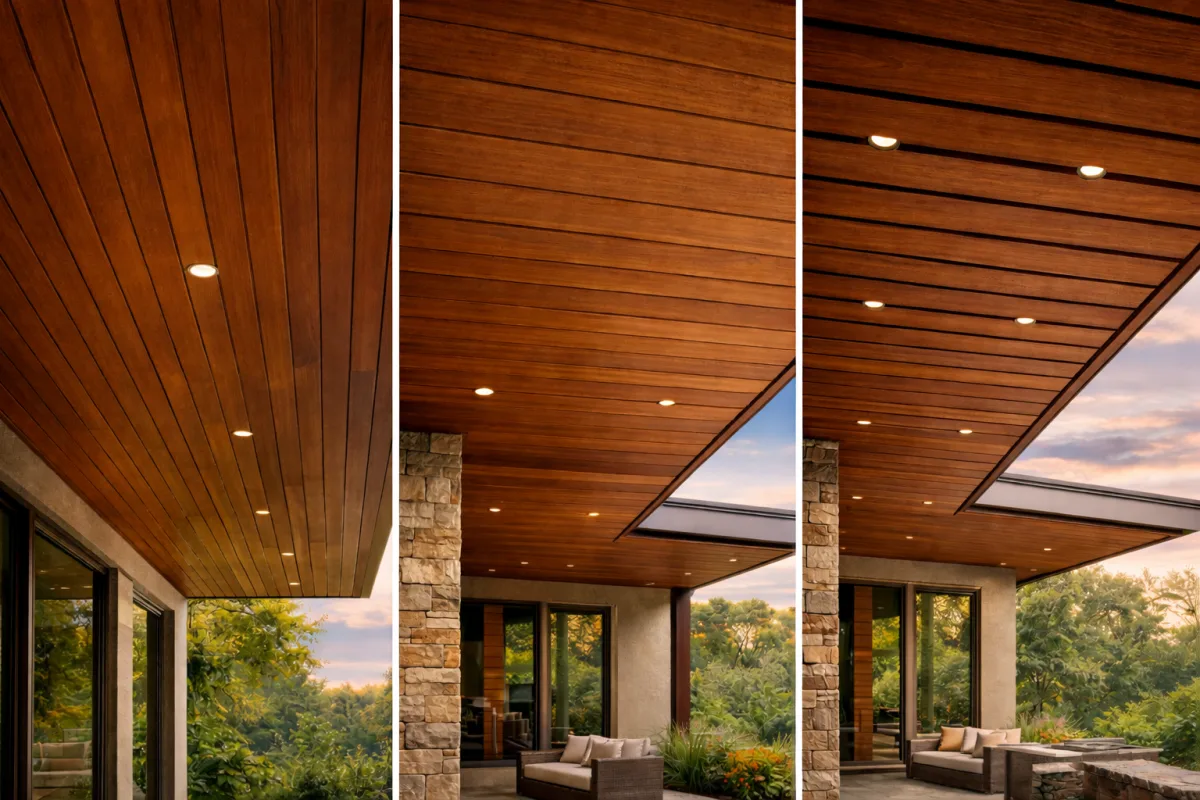
Why Choose Cumaru for Soffit & Ceilings
A Cumaru soffit — commonly known as a Brazilian Teak ceiling — is the smartest choice for homeowners who want a genuine hardwood porch ceiling without the premium price of Ipe. With a Janka hardness of 3,330 lbf and Class A fire rating, Cumaru soffit boards deliver near-identical overhead performance at a meaningfully lower cost per square foot. For large porch ceilings and whole-house eave soffits, the savings add up fast.
Brazilian Teak ceiling boards display warm golden-brown to reddish-tan tones overhead that create an inviting, luxurious atmosphere in any covered outdoor space. The color warmth of Cumaru is one of its greatest strengths for soffit applications — the golden hues make covered porches, patios, and pavilions feel open, welcoming, and sun-kissed even on overcast days. This warm tonality is something that darker species like Ipe and Massaranduba cannot provide.
In a protected soffit environment, Cumaru performs virtually identically to Ipe. Soffits are shielded from direct rain and the worst UV exposure, which means the practical difference between a 3,330 Janka wood and a 3,680 Janka wood is negligible overhead. Both resist rot, insects, and decay for decades. Both carry Class A fire ratings. For ceiling and soffit applications specifically, Cumaru delivers Ipe-level results at a better price.
Cumaru T&G soffit boards interlock to create the same seamless, flush ceiling surface that premium hardwood installations demand. The wood's natural grain variation — from warm amber to reddish-brown — creates visual interest overhead without the busy pattern of cheaper species. Cumaru shiplap creates clean shadow lines for a more contemporary soffit look, while rainscreen provides the built-in ventilation channels that vented eave soffits require.
A Cumaru porch ceiling lasts up to 50+ years without painting, staining, or chemical treatment. Compared to cedar porch ceilings that need repainting every 3-5 years and replacement at 15-20 years, a single Cumaru installation saves thousands in maintenance costs over its lifetime while looking dramatically better every single day.
Soffit Profiles Available in Cumaru
Tongue & Groove
Interlocking boards create a seamless, flush ceiling with no visible gaps. The gold standard for premium porch ceilings and soffit installations.
Best for: Porch ceilings, soffits, pavilions
Shiplap
Overlapping boards with a clean shadow line between each piece. Modern, defined look with subtle depth and character.
Best for: Modern aesthetic, accent ceilings
Rainscreen
Open-joint system with built-in ventilation channels. Modern architectural look with functional airflow for vented soffit applications.
Best for: Vented soffits, eave ventilation
Common Applications for Cumaru Soffit
Porch Ceilings
Covered porch and veranda ceilings. T&G is the most popular profile for this classic application.
Eave Soffits
Underside of roof eaves and overhangs. Protects rafters and adds curb appeal to every side of the home.
Pavilion Ceilings
Open-air pavilions, gazebos, pergola ceilings, and covered outdoor living spaces.
Outdoor Kitchens
Ceiling above outdoor cooking and dining areas. Hardwood adds warmth to the cooking experience.
Commercial Canopies
Hotels, restaurants, retail overhangs and entry canopies. Premium aesthetic for commercial properties.
Carport Ceilings
Covered parking and breezeway ceilings. Transforms utilitarian structures into architectural features.
Cumaru Soffit Specifications
| Botanical Name | Dipteryx odorata |
| Common Names | Cumaru, Brazilian Teak, Tonka Bean |
| Janka Hardness | 3,330 lbf |
| Density | 65 lbs/ft³ |
| Durability Class | Class 1 |
| Fire Rating | Class A (ASTM E84) |
| Rot Resistance | Excellent |
| Insect Resistance | Excellent |
| Expected Lifespan (protected exterior) | Up to 50+ years |
| Color (Fresh) | Reddish-brown to golden-tan |
| Color (Weathered) | Silver-gray patina |
| Available Thicknesses | 1x, 5/4 |
| Available Widths | 4", 6" |
| Available Profiles | T&G, Shiplap, Rainscreen |
| Origin | South America (Brazil, Peru, Colombia) |
Installation Tips for Cumaru Soffit
Install Cumaru soffit boards perpendicular to support framing. Pre-drill all holes with carbide-tipped bits. Blind-nail T&G through the tongue for a clean, fastener-free ceiling. Use stainless steel fasteners exclusively. Seal cut ends immediately. Allow 7-14 days of on-site acclimation. For porch ceilings, run boards along the length of the porch for the most appealing visual flow. In a protected soffit environment, oil finishing is optional — soffits weather very slowly.
Cumaru Soffit vs. The Alternatives
| Feature | Cumaru | Vinyl | Aluminum | Pine/Cedar |
|---|---|---|---|---|
| Appearance | Rich natural wood grain | Plastic, generic | Industrial, metallic | Natural but limited |
| Lifespan | Up to 50+ yrs | 15-20 yrs | 20-30 yrs | 10-20 yrs |
| Maintenance | None required | Wash | Wash | Paint/stain every 3-5 yrs |
| Fire Rating | Class A | Melts | Non-combustible | Not rated |
| Durability | Extremely hard | Brittle, cracks | Dents | Soft, prone to rot |
| Curb Appeal | Premium | Low | Low | Moderate |
| Eco-Friendly | Yes — natural | No — plastic | Recyclable | Yes — natural |
Cumaru Soffit vs Ipe Soffit
Ipe is slightly harder (3,680 vs 3,330 Janka) with a longer track record. In a protected soffit environment, the performance difference is minimal. Cumaru costs less per square foot, making it ideal for large porch ceilings where Ipe's premium may not be justified.
Learn more about Ipe SoffitCumaru Soffit vs Vinyl Soffit
Vinyl soffit looks plastic and institutional. Cumaru delivers warm, genuine wood grain overhead, a Class A fire rating (vinyl melts), and a up to 50+ year lifespan versus vinyl's 15-20 years. The visual difference is night and day.
Cumaru Soffit vs Cedar Porch Ceiling
Cedar porch ceilings peel, crack, and need repainting every 3-5 years. Cumaru is nearly 10 times harder (3,330 vs 350 Janka), lasts 2.5-3 times longer, and never needs paint. The warm golden-brown tone is more inviting than cedar's pale appearance.
Cumaru Soffit FAQ
All Cumaru Soffit Sizes & Profiles
Every available cumaru soffit product — click to view pricing and details.