.png?width=180&quality=75&format=webp)
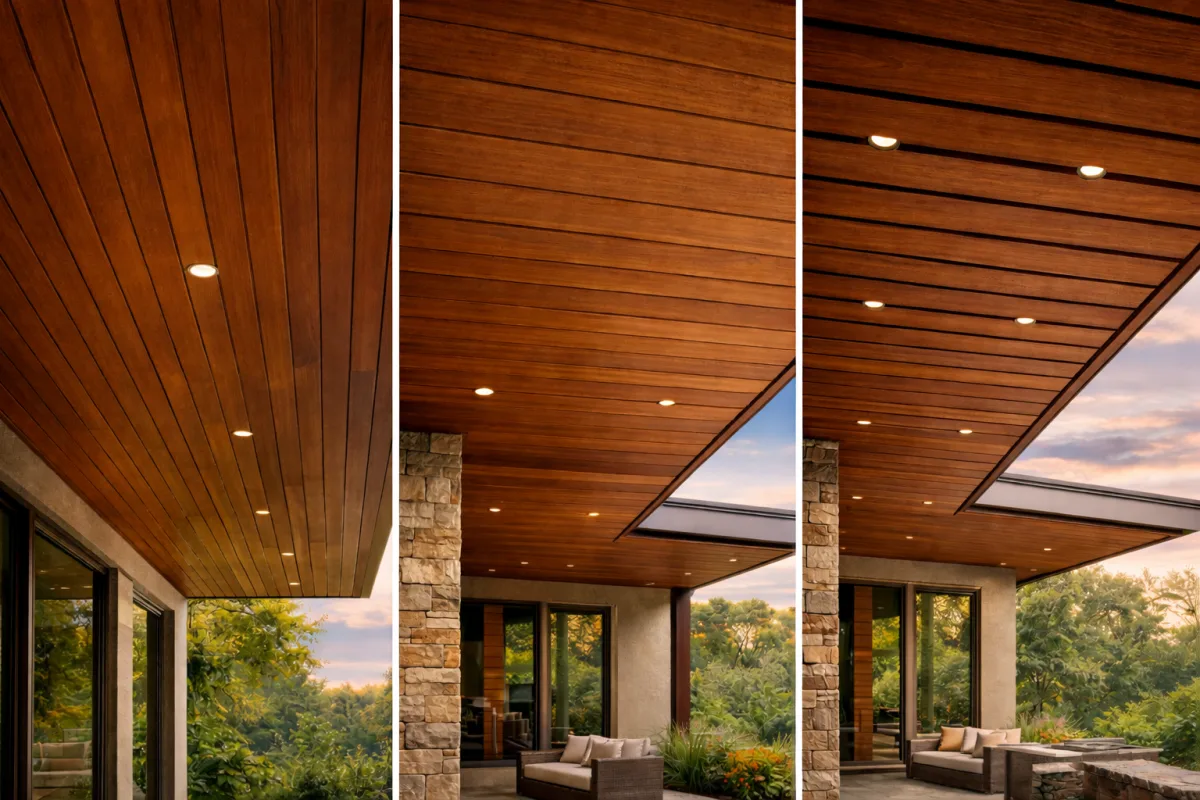
Tigerwood Soffit & Porch Ceiling
The ceiling everyone notices — Tigerwood's dramatic striped grain is even more stunning overhead, turning porch ceilings into the defining design feature of outdoor living spaces.
Janka Hardness
2,160 lbf
Lifespan
Up to 40+ years
Fire Rating
Class A
Profiles
T&G, Shiplap, Rainscreen
Why Choose Tigerwood for Soffit & Ceilings
A Tigerwood soffit is the ultimate conversation-starting ceiling. No other wood — not Ipe, not cedar, not any painted material — delivers the dramatic visual impact of Tigerwood's signature orange-brown base streaked with dark brown to near-black tiger stripes viewed from below. When guests look up at a Tigerwood porch ceiling, they stop and stare. That visual wow factor is why designers and architects specify Tigerwood ceiling boards for projects where the overhead surface needs to be a feature, not just a finish.
Tigerwood ceiling boards are uniquely stunning overhead because soffit is one of the few applications where you see the full grain pattern from directly below. The bold striped grain runs the length of each board, creating a dramatic flowing pattern across the entire ceiling plane. In a T&G ceiling installation, the seamless interlocking boards present an uninterrupted canvas of tiger stripes that shifts and catches light throughout the day. It's visual drama you simply cannot achieve with any other material.
Beyond aesthetics, Tigerwood soffit delivers genuine hardwood durability. At 2,160 Janka, Tigerwood is more than six times harder than cedar and carries a Class A fire rating — critical for overhead applications near rooflines. The wood naturally resists rot, decay, and insects for up to 40+ years without chemical treatment, making it safe and reliable for every outdoor ceiling application from eave soffits to pavilion ceilings.
The vivid stripe contrast of a fresh Tigerwood ceiling mellows beautifully over time. With UV oil, you preserve much of the original orange-and-black drama. Without treatment, the wood weathers to silver-gray where the striped pattern remains subtly visible — an architectural texture that designers love for its refined understatement. Either way, a Tigerwood outdoor ceiling ages gracefully.
For front-porch ceilings, entry overhangs, outdoor kitchen canopies, and any location where the ceiling is visible to guests and visitors, Tigerwood soffit creates an immediate premium impression. It's the ceiling that sells houses.
Soffit Profiles Available in Tigerwood
Tongue & Groove
Interlocking boards create a seamless, flush ceiling with no visible gaps. The gold standard for premium porch ceilings and soffit installations.
Best for: Porch ceilings, soffits, pavilions
Shiplap
Overlapping boards with a clean shadow line between each piece. Modern, defined look with subtle depth and character.
Best for: Modern aesthetic, accent ceilings
Rainscreen
Open-joint system with built-in ventilation channels. Modern architectural look with functional airflow for vented soffit applications.
Best for: Vented soffits, eave ventilation
Popular Tigerwood Soffit Products
Common Applications for Tigerwood Soffit
Porch Ceilings
Covered porch and veranda ceilings. T&G is the most popular profile for this classic application.
Eave Soffits
Underside of roof eaves and overhangs. Protects rafters and adds curb appeal to every side of the home.
Pavilion Ceilings
Open-air pavilions, gazebos, pergola ceilings, and covered outdoor living spaces.
Outdoor Kitchens
Ceiling above outdoor cooking and dining areas. Hardwood adds warmth to the cooking experience.
Commercial Canopies
Hotels, restaurants, retail overhangs and entry canopies. Premium aesthetic for commercial properties.
Carport Ceilings
Covered parking and breezeway ceilings. Transforms utilitarian structures into architectural features.
Tigerwood Soffit Specifications
| Botanical Name | Astronium spp. |
| Common Names | Tigerwood, Goncalo Alves, Jobillo |
| Janka Hardness | 2,160 lbf |
| Density | 56 lbs/ft³ |
| Durability Class | Class 1-2 |
| Fire Rating | Class A (ASTM E84) |
| Rot Resistance | Very Good |
| Insect Resistance | Very Good |
| Expected Lifespan (protected exterior) | Up to 40+ years |
| Color (Fresh) | Orange-brown with dark tiger stripes |
| Color (Weathered) | Silver-gray patina |
| Available Thicknesses | 1x, 5/4 |
| Available Widths | 4", 6" |
| Available Profiles | T&G, Shiplap, Rainscreen |
| Origin | Central & South America (Brazil, Mexico) |
Installation Tips for Tigerwood Soffit
Install Tigerwood soffit boards perpendicular to framing. Pre-drill all holes — Tigerwood is dense hardwood. Blind-nail T&G through the tongue for clean overhead appearance. Use stainless steel fasteners. Seal cut ends. Allow 7-14 days acclimation. For porch ceilings, running boards lengthwise showcases the striped grain pattern along its full length for maximum visual impact.
Tigerwood Soffit vs. The Alternatives
| Feature | Tigerwood | Vinyl | Aluminum | Pine/Cedar |
|---|---|---|---|---|
| Appearance | Rich natural wood grain | Plastic, generic | Industrial, metallic | Natural but limited |
| Lifespan | Up to 40+ yrs | 15-20 yrs | 20-30 yrs | 10-20 yrs |
| Maintenance | None required | Wash | Wash | Paint/stain every 3-5 yrs |
| Fire Rating | Class A | Melts | Non-combustible | Not rated |
| Durability | Extremely hard | Brittle, cracks | Dents | Soft, prone to rot |
| Curb Appeal | Premium | Low | Low | Moderate |
| Eco-Friendly | Yes — natural | No — plastic | Recyclable | Yes — natural |
Tigerwood Soffit vs Plain Wood Ceiling
A standard wood ceiling (cedar, pine, or even other hardwoods) offers uniform color overhead. A Tigerwood ceiling offers dramatic striped grain that makes the ceiling a design feature. If your ceiling should blend quietly, use Ipe or Cumaru. If it should make a statement, Tigerwood is unmatched.
Tigerwood Soffit vs Ipe Soffit
Ipe soffit is harder (3,680 vs 2,160 Janka) and longer-lasting, but has uniform chocolate-brown grain. Tigerwood wins on visual impact with its signature stripes. Choose Ipe for maximum durability or Tigerwood when the ceiling needs to be a showpiece.
Learn more about Ipe SoffitTigerwood Soffit vs Vinyl Soffit
Vinyl soffit is generic and industrial-looking. A Tigerwood ceiling is a work of art overhead — dramatic grain, warm colors, and natural beauty that vinyl cannot begin to approach. Tigerwood also carries a Class A fire rating while vinyl melts.
Tigerwood Soffit FAQ
All Tigerwood Soffit Sizes & Profiles
Every available tigerwood soffit product — click to view pricing and details.