.png?width=180&quality=75&format=webp)
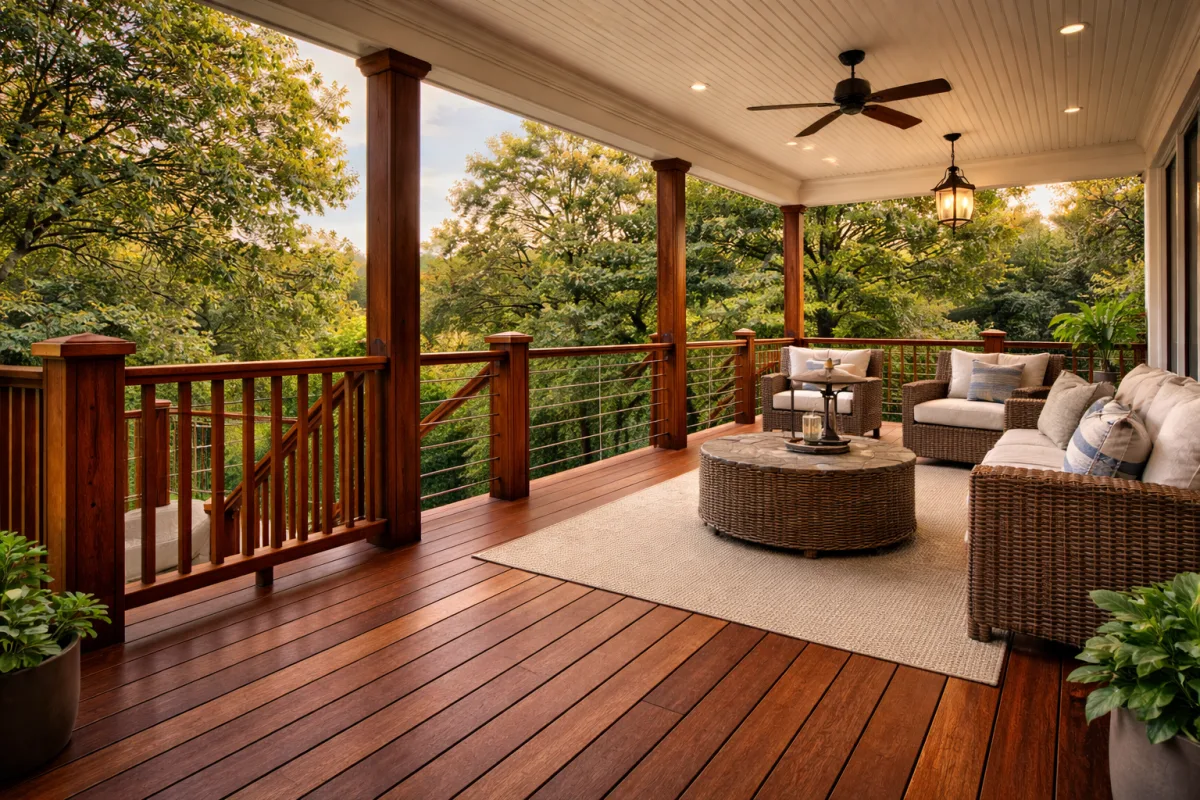
Exterior Railing Materials with Live Pricing
Shop complete exterior railing materials including posts, rails, and infill. Offered in premium hardwood options including Ipe and other high-end exterior species.
Where Railing Systems Are Used
Our railing components are suitable for decks, porches, balconies, stairs, and walkways.
Decks
Porches
Balconies
Stairs
Elevated Walkways
Shop Railing by Species
Match your deck with railing in the same premium hardwood species.
Ipe Railing
3,680 lbf Janka | Up to 75+ year lifespan
Match your Ipe deck with the strongest railing available — 3,680 Janka hardness delivers structural confidence and cohesive design from deck surface to cap rail.
Shop Ipe RailingCumaru Railing
3,330 lbf Janka | Up to 50+ year lifespan
Best-value matching railing — Brazilian Teak balusters, rails, and posts extend your Cumaru deck's warm tones up through the perimeter at a great price.
Shop Cumaru RailingTigerwood Railing
2,160 lbf Janka | Up to 40+ year lifespan
Railing that gets noticed — Tigerwood's dramatic striped grain is especially eye-catching on balusters and rails visible at eye level.
Shop Tigerwood RailingGarapa Railing
1,650 lbf Janka | Up to 30+ year lifespan
Light, bright railing that opens up your deck — Garapa's golden tones create an airy feel at the perimeter, perfect for coastal and modern designs.
Shop Garapa RailingMassaranduba Railing
3,190 lbf Janka | Up to 50+ year lifespan
Rich red accent railing — Massaranduba's deep reddish-brown adds warm, dramatic color to your deck perimeter with ironwood-class structural strength.
Shop Massaranduba RailingRed Balau Railing
2,700 lbf Janka | Up to 40+ year lifespan
Warm, versatile railing from Southeast Asia — Red Balau delivers premium hardwood beauty and strength at a competitive price for deck perimeters.
Shop Red Balau RailingWhy Premium Hardwoods for Railing?
Our railing systems are offered in select premium hardwoods commonly used in high-end exterior construction, chosen for durability, stability, and long-term appearance in exposed environments.
Code-Aware Installation Planning
Railing requirements are governed by local building codes. Refer to the International Code Council (ICC) and ADA accessibility standards for specific requirements.
Railing Height
- • 36": Typical residential standard for decks and porches
- • 42": Common commercial requirement and some elevated residential decks
- • Stairs: Handrail typically required at 34"–38" above stair nosing
- ⚠ Note: Local codes may vary—verify with your building department
Spacing Requirements
- • Post spacing: 6 feet is standard for structural consistency
- • Baluster spacing: Most codes require 4" maximum opening (sphere test)
- • Infill spacing: Maintain uniform gaps throughout railing run
- • Structural consistency: Keep spacing uniform for stability and code compliance
Stairs vs Level Railing
- • Handrail: Required for stairs (graspable profile, 1.25"–2" diameter)
- • Guardrail: Safety barrier for elevated decks/balconies
- • Continuous rail: Best practice for smooth transitions at landings
- • Height measurement: Stairs measured from stair nosing, not deck surface
Installation Best Practices
Posts:
- • Structural anchoring is critical
- • Use proper blocking or through-bolting
- • Maintain layout consistency
Rails:
- • Top rail continuity ensures strength
- • Clean transitions at corners and stairs
- • Secure rail-to-post connections
Infill:
- • Maintain alignment consistency
- • Use corrosion-resistant fasteners
- • As with all exterior railing systems using natural wood, consistent spacing helps accommodate seasonal movement
Railing System Diagrams
Vertical Baluster Railing
Standard vertical baluster system: Posts at 6', top rail cap, bottom rail, vertical balusters at code-friendly spacing
Horizontal Rail Railing
Modern horizontal rail system: Posts at 6', top rail cap, horizontal infill boards between posts
Important: Post-to-Rail Connections
Proper post anchoring and rail connections are critical for structural safety. Posts must be securely fastened to the deck frame or structure using appropriate hardware. Consult building codes and structural requirements for your specific installation.
Frequently Asked Questions
What railing height should I use?
Typical residential deck railing is 36" high, while commercial applications and some jurisdictions require 42". For stairs, handrails are typically 34"–38" measured from the stair nosing. Always verify your local building code requirements before installation.
How far apart should railing posts be?
Standard post spacing is 6 feet on-center for most residential railing systems. This provides good structural support while minimizing material costs. For heavy-duty applications or areas with specific code requirements, 4-foot spacing may be used.
Can I mix level railing and stair railing?
Yes. Most deck projects include both level guardrails (for the deck perimeter) and stair handrails. Stair railings typically require continuous handrails and may have different height requirements than level guardrails.
Can I order railing components individually?
Absolutely. You can order posts, top rails, bottom rails, balusters, and caps individually by species, size, grade, and length.
How much extra material should I order?
We recommend 10% waste factor for railing projects. This accounts for cuts, potential defects, installation adjustments, and future repairs. For complex layouts with many corners or custom cuts, consider 15%.
Do hardwood railings require sealing?
No. Premium hardwoods like Ipe are naturally resistant to rot, decay, and insects without chemical treatments. Sealing or oiling is optional for aesthetic reasons (maintaining color) but not required for structural durability or weather resistance.
Available Railing Sizes
Shop by size — posts, rails, balusters, and caps with live pricing.
Railing by Hardwood Species
Choose your species to see sizes, pricing, and specifications.