.png?width=180&quality=75&format=webp)
Why Choose Massaranduba for Siding & Cladding
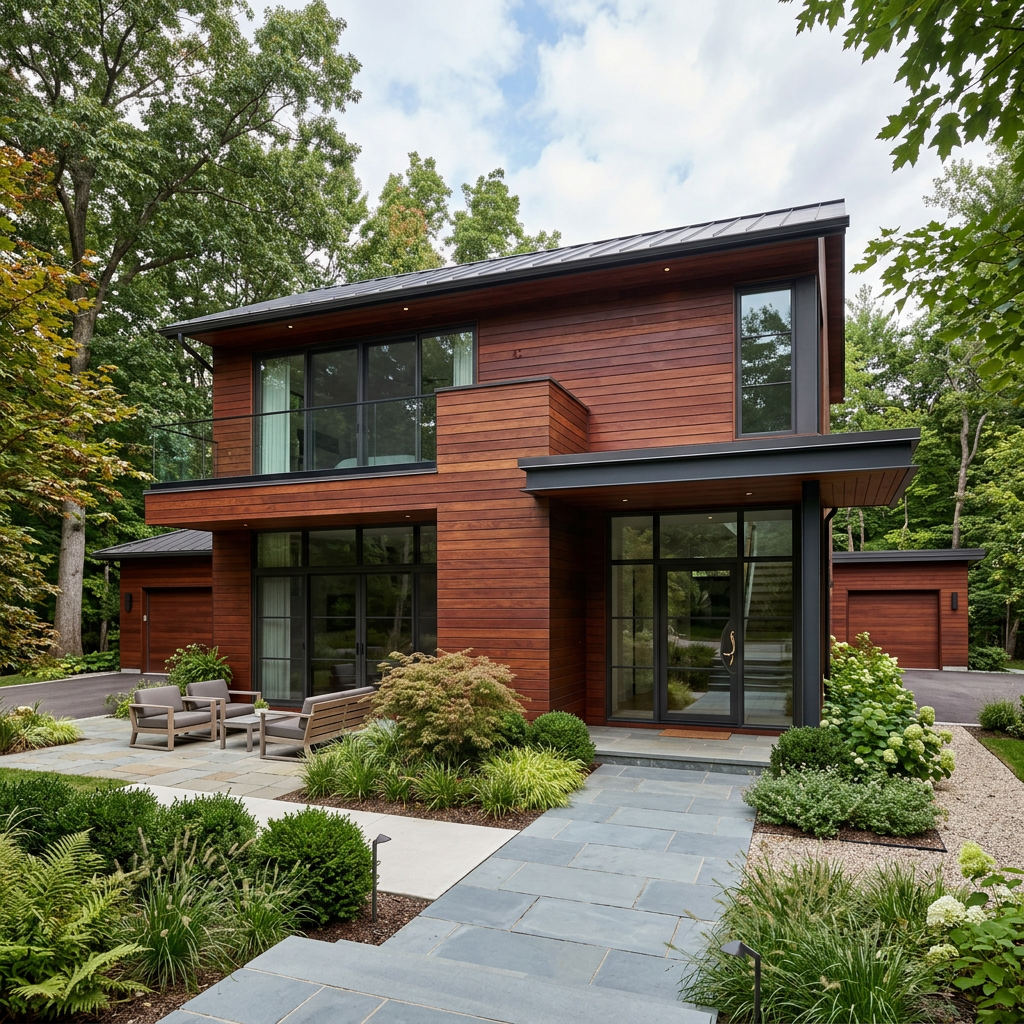
Massaranduba siding — known in the trade as Brazilian Redwood siding — is the definitive replacement for old-growth redwood cladding. For architects and homeowners who want that deep, saturated reddish-brown facade that California redwood made famous, Massaranduba wood siding delivers the same visual warmth with approximately seven times the hardness and five times the outdoor lifespan.
With a Janka hardness of 3,190 lbf and a density of 67 lbs/ft³, Massaranduba cladding sits in the same performance tier as Ipe for siding applications. This extreme density translates directly to impact resistance, structural integrity on vertical surfaces, and a up to 50+ year exterior lifespan that makes Brazilian Redwood siding a true "build it once" material. The wood naturally resists rot, decay, mold, and insect damage without chemical treatment, and carries a Class A fire rating for building code compliance.
The defining characteristic of Massaranduba exterior cladding is its deep, rich reddish-brown color — a genuine redwood tone that no other tropical hardwood species can match. While Ipe trends toward chocolate-brown and Cumaru toward tan-brown, Massaranduba delivers a warm, saturated red that reads as premium and distinctive on any facade. The color is remarkably consistent across boards, giving Massaranduba siding projects a cohesive, elegant appearance that stands out in any neighborhood.
Massaranduba shiplap siding is particularly sought after for craftsman-style homes, mountain lodge architecture, and any project where the homeowner envisions a warm red-toned exterior. The wood also makes stunning accent walls, entry surrounds, and gable treatments where its distinctive color creates a focal point against neutral primary siding.
Compared to domestic redwood siding, Massaranduba is in a different performance league — 3,190 Janka vs redwood's 450, with Class 1 durability vs redwood's moderate outdoor performance. Where redwood siding needs regular staining and treatment to prevent decay, Massaranduba Brazilian Redwood siding is inherently protected by its natural density and oils. Against Ipe siding, Massaranduba offers a unique color alternative at a similar performance level.
Siding Profiles Available in Massaranduba
Overlapping boards with a distinctive shadow line. Classic exterior look for traditional and modern facades.
Best for: Traditional facade, accent walls
Interlocking boards for a seamless, flush surface. Excellent weather protection with a refined appearance.
Best for: Soffits, porch ceilings, protected walls
Massaranduba Siding Specifications
| Botanical Name | Manilkara bidentata |
| Common Names | Massaranduba, Brazilian Redwood, Bulletwood |
| Janka Hardness | 3,190 lbf |
| Density | 67 lbs/ft³ |
| Durability Class | Class 1 |
| Fire Rating | Class A (ASTM E84) |
| Rot Resistance | Excellent |
| Insect Resistance | Excellent |
| Expected Lifespan (exterior) | Up to 50+ years |
| Color (Fresh) | Deep reddish-brown (redwood color) |
| Color (Weathered) | Silver-gray patina |
| Available Thicknesses | 1x, 5/4 |
| Available Widths | 4", 6", 8" |
| Available Profiles | Shiplap, Tongue & Groove, Rainscreen, E4E |
| Origin | South America (Brazil, Guyana, Suriname) |
Available Massaranduba Siding Sizes
Installation Essentials for Massaranduba Siding
Massaranduba is extremely dense and requires pre-drilling with carbide-tipped drill bits — similar to working with Ipe. Stainless steel fasteners are mandatory. Plan for slower cutting and drilling rates. Install over a proper rainscreen or drainage plane. Allow 7-14 days of on-site acclimation. Seal all cut ends immediately with end-grain sealer. The wood's high density makes it excellent for face-screw installations; hidden fastener systems work with appropriate profiles.
- Rainscreen/drainage plane — required behind all exterior siding
- Stainless steel fasteners — 316 grade for coastal environments
- Acclimate 7-14 days on-site before installation
- Seal cut ends immediately with end-grain sealer
How Massaranduba Siding Compares
Massaranduba Siding vs Ipe Siding
Ipe siding is slightly harder (3,680 vs 3,190 Janka) with a longer track record (up to 75+ vs 50+ years). Massaranduba offers a distinctive deep red color that Ipe lacks — choose based on whether you prefer brown or red facade tones.
Learn more about Ipe SidingMassaranduba Siding vs Cumaru Siding
Cumaru siding is slightly harder (3,330 vs 3,190 Janka) with warmer brown tones. Massaranduba's unique deep red color is its primary advantage — both deliver Class 1 durability and up to up to 50+ year lifespans.
Learn more about Cumaru SidingMassaranduba Siding vs Redwood Siding
Domestic redwood shares Massaranduba's red color but is dramatically less durable (450 vs 3,190 Janka) and lasts only 10-15 years. Massaranduba is the premium redwood replacement — same look, seven times the hardness.
Massaranduba Siding FAQ
All Massaranduba Siding Sizes & Profiles
Every available massaranduba siding product — click to view pricing and details.