.png?width=180&quality=75&format=webp)
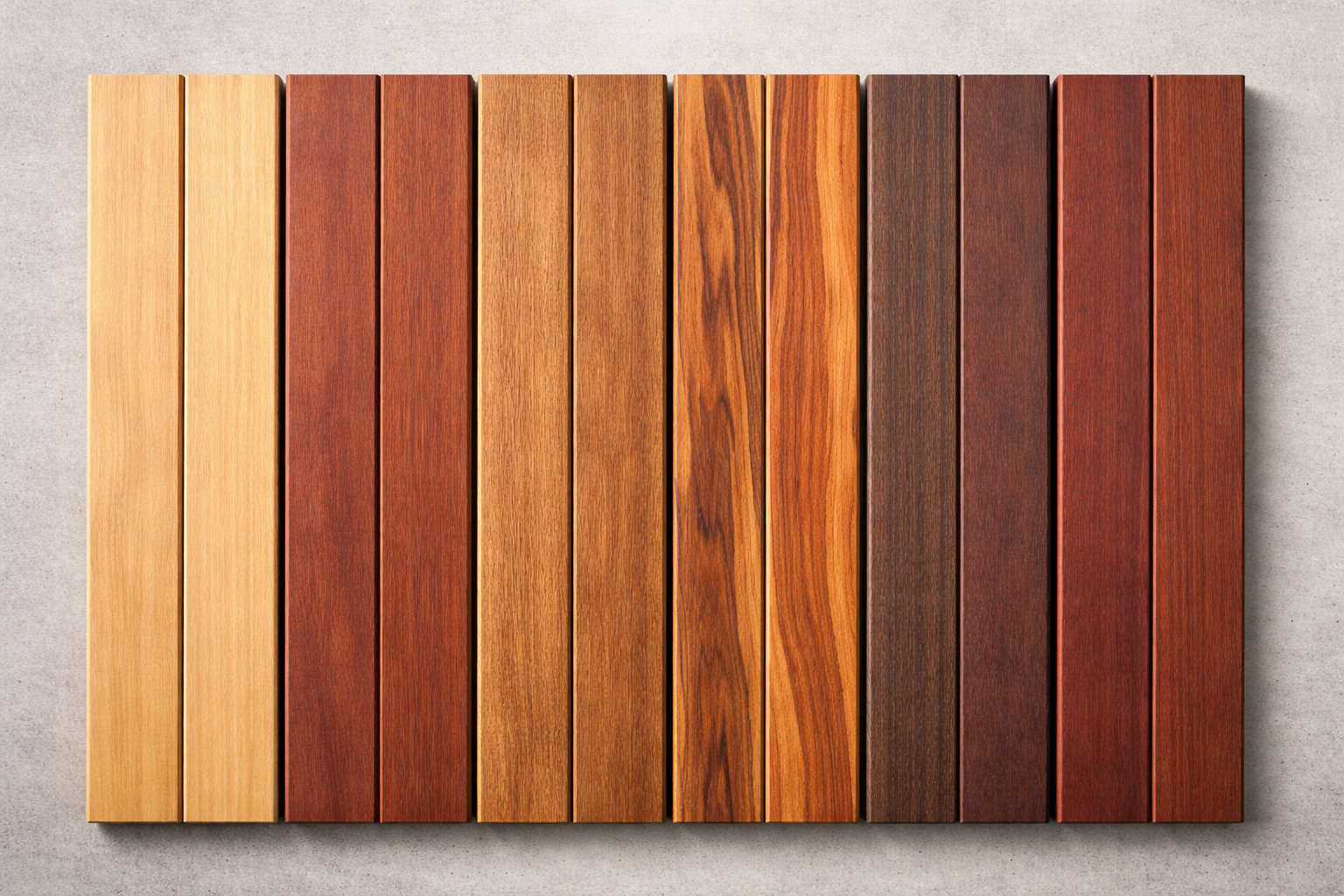
Ipe Decking Alternatives — 5 Hardwoods Compared
Ipe is the gold standard, but five other exotic hardwoods deliver real performance at lower price points. We sell all six species — here's an honest comparison from a supplier that stocks every option.
6 Species
All Class A fire rated
$5–$20/SF
Material cost range
30–75+ yr
Lifespan range
What Are the Best Alternatives to Ipe Decking?
The best Ipe decking alternatives in 2026 are Cumaru (best overall value — 96% as hard at 20–30% less cost), Massaranduba (Ipe-level density with unique red color), Red Balau (mid-range price, proven marine durability), Tigerwood (dramatic striped grain), and Garapa (most affordable at near-composite pricing). All six species are Class A fire rated and naturally resist rot and insects without chemical treatment.
Why Consider Ipe Decking Alternatives?
Ipe is the hardest, most durable decking wood on earth — but it's also the most expensive. At $10–$20 per square foot for material alone, a 400 SF Ipe deck can cost $4,000–$8,000 in boards before you add framing, fasteners, and labor. That's a significant investment, and for many homeowners, a less expensive exotic hardwood delivers 80–95% of Ipe's performance at a fraction of the cost.
The five alternatives below are not inferior materials — they're different species from the same tropical forests, each with unique strengths. Cumaru and Massaranduba are within striking distance of Ipe on the Janka hardness scale. Tigerwood offers grain patterns that Ipe simply can't match. And Garapa puts genuine hardwood decking within reach of budgets that might otherwise default to composite.
Budget Flexibility
Save 20–50% on material vs Ipe while keeping real hardwood performance and beauty
Easier Installation
Lower-density species like Garapa and Tigerwood are easier to cut, drill, and fasten
Unique Aesthetics
Lighter colors (Garapa), deeper reds (Massaranduba), or dramatic stripes (Tigerwood)
Ipe vs Alternatives — Side-by-Side Comparison
All data from real supplier specifications. Prices reflect 2026 material-only costs per square foot.
| Specification | Ipe The Gold Standard | Cumaru Best Value Alternative | Massaranduba Brazilian Redwood | Red Balau Southeast Asian Hardwood | Tigerwood Most Distinctive Grain | Garapa Budget-Friendly Exotic |
|---|---|---|---|---|---|---|
Janka Hardness | 3,680 lbf | 3,540 lbf | 3,190 lbf | 2,700 lbf | 2,170 lbf | 1,510 lbf |
Material Cost / SF | $10–$20 | $7–$14 | $7–$13 | $5–$10 | $6–$12 | $5–$9 |
Cost vs Ipe | Baseline | 20–30% less | 15–25% less | 30–40% less | 30–40% less | 40–50% less |
Lifespan | Up to 75+ years | 50+ years | 50+ years | 30+ years | 30–40+ years | 30+ years |
Fire Rating | Class A | Class A | Class A | Class A | Class A | Class A |
Rot Resistance | Excellent | Excellent | Excellent | Very Good | Very Good | Good |
Color | Rich brown | Golden brown | Deep red-brown | Red-brown | Striped orange-brown | Golden blonde |
Maintenance | Very Low | Very Low | Very Low | Low | Moderate | Moderate |
Workability | Hard | Hard | Hard | Moderate | Moderate | Easy |
Explore Each Ipe Alternative
Click through to species pages for full specifications, or cost guides for installed pricing by region.
How to Choose the Right Ipe Alternative for Your Project
Every decking project has different priorities. A lakefront dock in Minnesota has different needs than a pool deck in Phoenix. Here's how to narrow down the right species based on what matters most to you.
If Durability Is Your Top Priority
Choose Cumaru or Massaranduba. Both have Janka hardness above 3,000 lbf, both last 50+ years, and both share Ipe's Class A fire rating. Cumaru is 20–30% cheaper; Massaranduba offers a unique deep red color. Either will deliver Ipe-level performance for decades.
If Budget Is the Main Concern
Garapa is the clear winner at $5–$9/SF — priced competitively with premium composite but with a 30+ year lifespan and Class A fire rating. It won't match Ipe's extreme hardness, but at 1,510 Janka it's still 4× harder than cedar and much harder than any synthetic decking.
If Appearance Is the Priority
Tigerwood creates the most visually striking deck of any species. The contrasting light and dark stripes are impossible to replicate — each board is unique. Garapa's golden blonde is the lightest exotic hardwood for a bright, contemporary look, while Massaranduba's deep burgundy is the richest.
Ipe Alternatives vs Composite Decking
Many homeowners comparing Ipe alternatives are also considering composite. Here's the key difference: every exotic hardwood on this page outperforms composite in fire safety (Class A vs Class C), lifespan (30–75+ years vs 25), and environmental impact. Material costs overlap in the $5–$15/SF range. For a detailed head-to-head, see our Ipe vs Trex comparison.