.png?width=180&quality=75&format=webp)
Why Choose Ipe for Siding & Cladding
Ipe siding is the premier choice for architects, builders, and homeowners who demand the absolute best in exterior cladding performance. With a Janka hardness of 3,680 lbf and a density of 69 lbs/ft³, Ipe is the densest commercially available siding wood — a building envelope material that genuinely outlasts the structure it protects. With an expected lifespan of up to 75+ years, Ipe wood siding has been specified on landmark commercial projects, luxury residences, and public buildings where failure is not an option.
What makes Ipe cladding uniquely valuable for siding applications is its Class A fire rating (ASTM E84), the highest rating achievable for building materials. In wildfire-prone zones across California, Colorado, and the western United States, Ipe exterior cladding meets or exceeds the most stringent WUI (Wildland-Urban Interface) building codes. This fire resistance, combined with natural rot and insect immunity, makes Ipe siding a true "install it and forget it" facade material that requires no chemical treatments, no painting, and no re-siding within most homeowners' lifetimes.
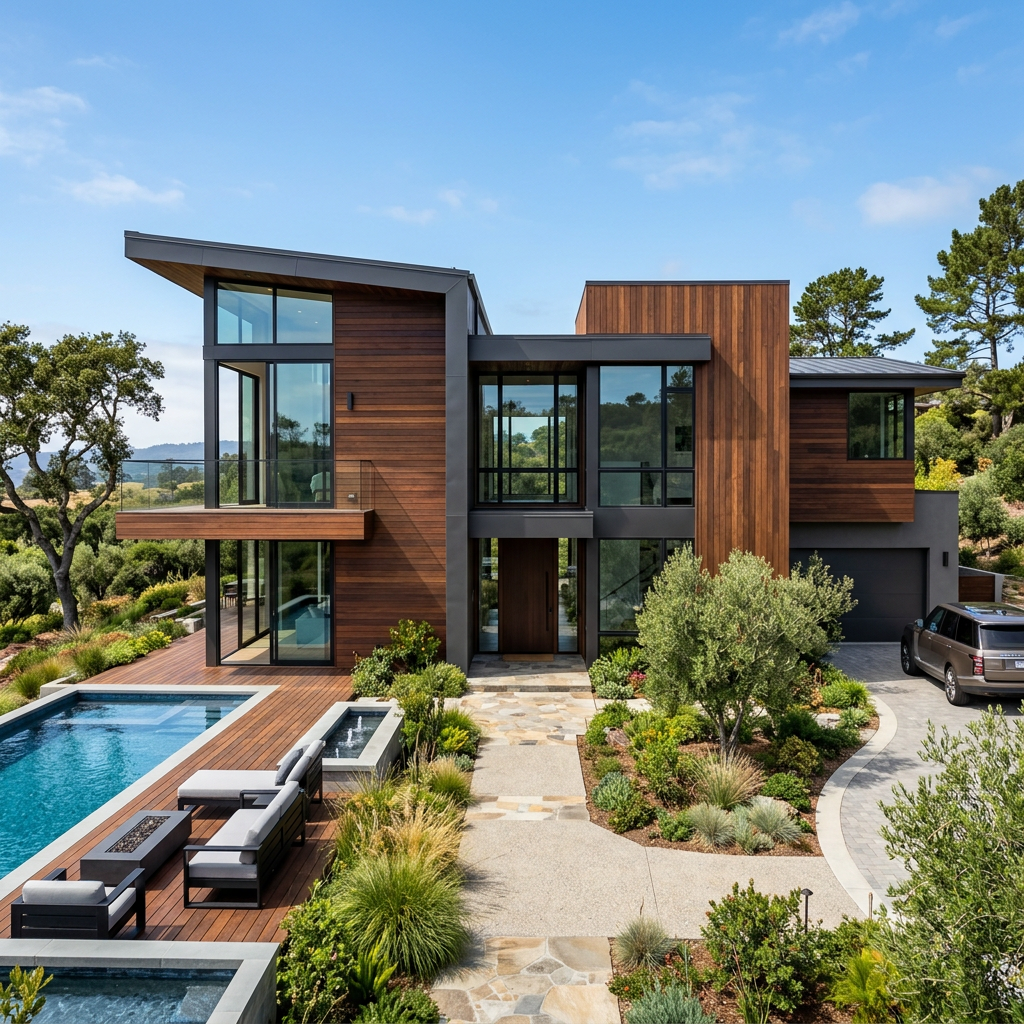
Fresh-milled Ipe shiplap siding displays rich olive-brown to dark chocolate-brown tones with subtle grain variation that gives each board organic character on a vertical facade. The wood's natural oils create a warm, luminous surface that catches light beautifully on exterior walls. Left untreated, Ipe siding weathers to a distinguished silver-gray patina over 6-12 months — a weathered look that many contemporary architects specifically design for. For those who prefer to preserve the original brown tones, annual application of UV-protective oil maintains the color on facades just as it does on decks.
Ipe wood cladding pairs naturally with virtually every architectural style — from sleek modern homes with clean lines to traditional craftsman designs, rustic mountain lodges, and high-end commercial facades. The wood's density means it resists denting from hail, impact from wind-blown debris, and the everyday wear that siding endures year after year.
Compared to fiber cement siding (James Hardie, etc.), Ipe offers a natural aesthetic that manufactured products cannot match, along with dramatically longer service life. Fiber cement must be painted and repainted every 7-15 years, while Ipe siding needs no paint — ever. Ipe can last up to 75+ years, far exceeding fiber cement's typical 30-50 year service life. Against vinyl siding, the comparison isn't even close: Ipe delivers genuine prestige, real weather resistance, and a lifespan measured in generations. Brazilian walnut siding is a genuine investment in your home's value, curb appeal, and long-term protection.
Siding Profiles Available in Ipe
Overlapping boards with a distinctive shadow line. Classic exterior look for traditional and modern facades.
Best for: Traditional facade, accent walls
Interlocking boards for a seamless, flush surface. Excellent weather protection with a refined appearance.
Best for: Soffits, porch ceilings, protected walls
Ipe Siding Specifications
| Botanical Name | Handroanthus spp. |
| Common Names | Ipe, Brazilian Walnut, Lapacho |
| Janka Hardness | 3,680 lbf |
| Density | 69 lbs/ft³ |
| Durability Class | Class 1 |
| Fire Rating | Class A (ASTM E84) |
| Rot Resistance | Excellent |
| Insect Resistance | Excellent |
| Expected Lifespan (exterior) | Up to 75+ years |
| Color (Fresh) | Olive-brown to dark chocolate-brown |
| Color (Weathered) | Silver-gray patina |
| Available Thicknesses | 1x, 5/4 |
| Available Widths | 4", 6", 8" |
| Available Profiles | Shiplap, Tongue & Groove, Rainscreen, E4E |
| Origin | Central & South America (Brazil, Bolivia, Peru) |
Installation Essentials for Ipe Siding
Always install Ipe siding over a proper rainscreen system or drainage plane — this is critical for any cladding material and ensures long-term performance of both the siding and the building envelope. Use stainless steel fasteners exclusively (316 grade for coastal environments). Pre-drill all screw holes with carbide-tipped bits, as Ipe's extreme density will dull standard bits quickly. For shiplap and T&G profiles, face-screwing through the board is standard; hidden fastener options are available for rainscreen installations. Allow boards to acclimate on-site for 7-14 days before installation. Seal all cut ends with end-grain sealer immediately after cutting. Both horizontal and vertical orientations work well — vertical installation sheds water more naturally, while horizontal creates the classic clapboard look.
- Rainscreen/drainage plane — required behind all exterior siding
- Stainless steel fasteners — 316 grade for coastal environments
- Acclimate 7-14 days on-site before installation
- Seal cut ends immediately with end-grain sealer
How Ipe Siding Compares
Ipe Siding vs Fiber Cement
Fiber cement siding (James Hardie, etc.) requires painting every 7-15 years and has a 30-50 year lifespan. Ipe siding never needs paint, lasts up to 75+ years, and offers natural beauty that manufactured materials cannot replicate.
Ipe Siding vs Cedar Siding
Cedar siding is 3-5 times less durable than Ipe (350 vs 3,680 Janka) and requires regular staining and maintenance to prevent rot. Ipe siding needs no chemical treatment and lasts 5-6 times longer.
Ipe Siding vs Cumaru Siding
Cumaru siding offers 90% of Ipe's performance at a lower price point — warm reddish-brown tones with 3,330 Janka hardness. Choose Ipe for maximum lifespan (up to 75+ years) or Cumaru for best value in premium cladding.
Learn more about Cumaru SidingIpe Siding FAQ
All Ipe Siding Sizes & Profiles
Every available ipe siding product — click to view pricing and details.
Explore More Siding
All Hardwood Siding
Browse all species
Cumaru Siding
Shop cumaru siding
Tigerwood Siding
Shop tigerwood siding
Garapa Siding
Shop garapa siding
Massaranduba Siding
Shop massaranduba siding
Red Balau Siding
Shop red balau siding
About Ipe Wood
Species information & properties
All Hardwood Species
Compare all species