.png?width=180&quality=75&format=webp)
Why Choose Ipe for Fencing
An Ipe wood fence is the ultimate "build it once" investment. With a Janka hardness of 3,680 lbf — more than eight times harder than pressure-treated pine — Ipe fence boards, rails, and posts stand up to decades of weather, impact, and UV exposure without softening, splintering, or rotting. Municipal boardwalks built with Ipe over 40 years ago are still in service, and the same ironwood density that protects those public structures makes Ipe fencing virtually indestructible in residential yards.
Unlike pressure-treated lumber, which relies on copper and arsenic compounds to resist decay, Ipe is naturally rot-resistant and insect-proof. That means an Ipe privacy fence is completely safe for yards where children and pets play — no toxic leaching, no chemical odors, no worries. Brazilian walnut fencing delivers genuine peace of mind alongside unmatched performance, making it the preferred choice for health-conscious homeowners who refuse to compromise on durability.
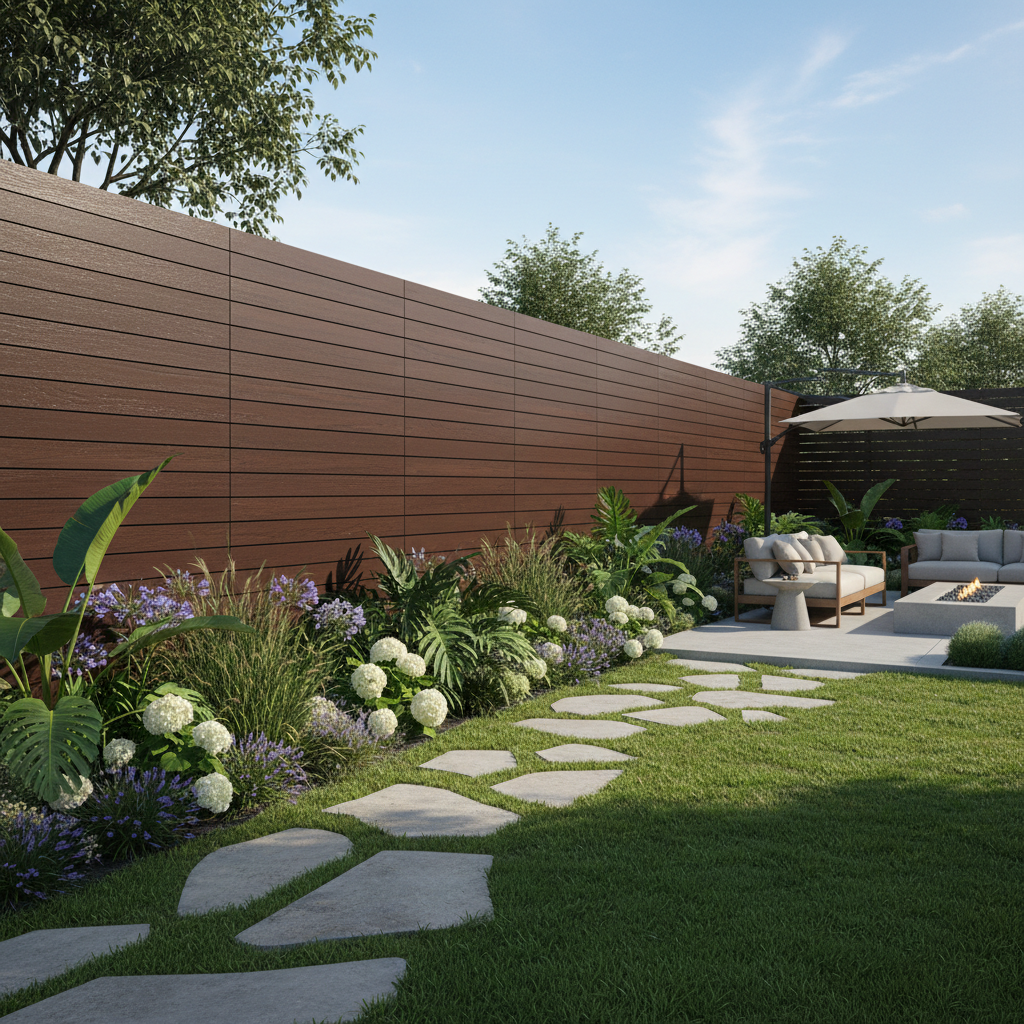
Fresh Ipe fence boards display rich olive-brown to dark chocolate-brown tones that make any property look premium from the street. The wood's natural grain variation gives each board character without the uniformity of plastic or vinyl. Left untreated, Ipe fencing weathers to an elegant silver-gray patina over 6-12 months — a distinguished look that many architects and homeowners actively choose. For those who prefer to maintain the original warm brown, annual application of UV-protective oil preserves the color beautifully.
Ipe fence pickets work in every style: vertical privacy, horizontal slat, board-on-board, and decorative designs. The wood's density means Ipe fence pickets stay straight and true year after year, resisting the warping and cupping that plague cedar and pine fences after just a few seasons. Ipe is Class A fire rated, adding another layer of safety for properties in wildfire-prone regions.
How long does an Ipe fence last? With proper installation, an Ipe fence can last up to 75 years or more — three to five times longer than cedar and five to seven times longer than pressure-treated pine. When you factor in the cost of replacing a cedar fence every 15-20 years, Ipe fencing is actually the most economical choice over the lifetime of your home.
Fence Styles You Can Build with Ipe
Classic privacy fencing. Vertical boards with optional gaps for airflow.
Best for: Privacy, security
Pickets: 1x4, 1x6, or 5/4x4 | Rails: 2x4 or 2x6
Modern architectural look. Horizontal boards run between posts for a contemporary feel.
Best for: Modern homes, curb appeal
Boards: 1x4, 1x6 | Posts: 4x4 or 6x6
Alternating boards on both sides for full privacy from any angle. Premium appearance.
Best for: Full privacy, neighborhoods
Pickets: 1x6 | Rails: 2x4 or 2x6
Architectural and specialty designs. Custom milling available for unique profiles.
Best for: Accent fences, entries
Contact us for custom profiles
Popular Ipe Fencing Products
What You Need for a Ipe Fence
Pickets (face boards)
- • 1x4 — Narrow pickets, decorative spacing
- • 1x6 — Standard privacy picket (most popular)
- • 5/4x4 — Thicker picket for added rigidity
Rails (horizontal supports)
- • 2x4 — Standard rail size
- • 2x6 — Heavy-duty rail for tall fences
- Use 2 rails for fences under 5\'. Use 3 rails for 6\'+ fences.
Posts (vertical structural members)
- • 4x4 — Standard fence post
- • 6x6 — Heavy-duty / gate posts
- Set posts 2-3 feet deep in concrete.
Ipe Fencing Specifications
| Botanical Name | Handroanthus spp. |
| Common Names | Ipe, Brazilian Walnut, Lapacho |
| Janka Hardness | 3,680 lbf |
| Density | 69 lbs/ft³ |
| Durability Class | Class 1 |
| Fire Rating | Class A (ASTM E84) |
| Rot Resistance | Excellent |
| Insect Resistance | Excellent |
| Ground Contact | Excellent |
| Expected Fence Lifespan | Up to 75+ years |
| Color (Fresh) | Olive-brown to dark chocolate-brown |
| Color (Weathered) | Silver-gray patina |
| Chemical Treatment Required | No |
| Available Picket Sizes | 1x4, 1x6, 5/4x4 |
| Available Rail Sizes | 2x4, 2x6 |
| Available Post Sizes | 4x4, 6x6 |
| Origin | Central & South America (Brazil, Bolivia, Peru) |
Fencing Installation Tips for Ipe
Ipe's extreme density requires pre-drilling every fastener hole with carbide-tipped bits. Use 316 stainless steel screws for all connections — standard screws corrode and cause black staining. Set posts 2.5-3 feet deep in concrete. Space posts 6 feet on center (max 8 feet for sheltered locations). Use 3 rails for fences 6 feet or taller. Seal all cut ends immediately with end-grain sealer. Allow boards to acclimate on-site 7-14 days before installation. Leave 1/2 inch gap at the bottom of pickets for drainage and ground clearance.
Ipe Fence vs. The Alternatives
| Feature | Ipe | Cedar | PT Pine | Vinyl | Composite |
|---|---|---|---|---|---|
| Lifespan | Up to 75+ yrs | 15-20 yrs | 10-15 yrs | 20-30 yrs | 20-25 yrs |
| Rot Resistance | Natural | Moderate | Chemical | N/A | Low |
| Insect Resistance | Natural | Moderate | Chemical | N/A | Low |
| Maintenance | Optional oil | Stain yearly | Stain yearly | Wash only | Wash only |
| Chemical Treatment | None | None | Yes | Plastic | Plastic/wood |
| Strength (Janka) | 3,680 lbf | 350 lbf | 690 lbf | N/A | N/A |
| Fire Rating | Class A | Not rated | Not rated | Melts | Melts |
| Eco-Friendly | Yes — natural | Yes — natural | No — chemicals | No — plastic | No — plastic |
Ipe Fence vs Cedar Fence
Cedar fences last 15-20 years with regular staining and maintenance. An Ipe fence lasts up to 75+ years with zero chemical treatment. Ipe is over 10 times harder than cedar (3,680 vs 350 Janka), meaning no dents, no soft spots, no rot.
Ipe Fence vs Pressure-Treated Pine
Pressure-treated pine uses copper and arsenic chemicals that can leach into soil and are a concern near gardens, pets, and children. Ipe is naturally rot-resistant with no chemicals — and lasts 5-7 times longer (up to 75+ vs 10-15 years).
Ipe Fence vs Cumaru Fence
Cumaru (Brazilian Teak) fencing offers 90% of Ipe's performance at a lower cost per linear foot. For large fencing projects where budget matters, Cumaru is the smart alternative. Choose Ipe for maximum lifespan or Cumaru for best value.
Learn more about Cumaru FenceIpe Fencing FAQ
All Ipe Fencing Sizes & Profiles
Every available ipe fencing product — click to view pricing and details.
Explore More Fencing
All Hardwood Fencing
Browse all species
Cumaru Fencing
Shop cumaru fencing
Tigerwood Fencing
Shop tigerwood fencing
Garapa Fencing
Shop garapa fencing
Massaranduba Fencing
Shop massaranduba fencing
Red Balau Fencing
Shop red balau fencing
About Ipe Wood
Species information & properties
All Hardwood Species
Compare all species