.png?width=180&quality=75&format=webp)
Learn more about massaranduba wood — species properties, sustainability, and care guide.
Why Choose Massaranduba Decking
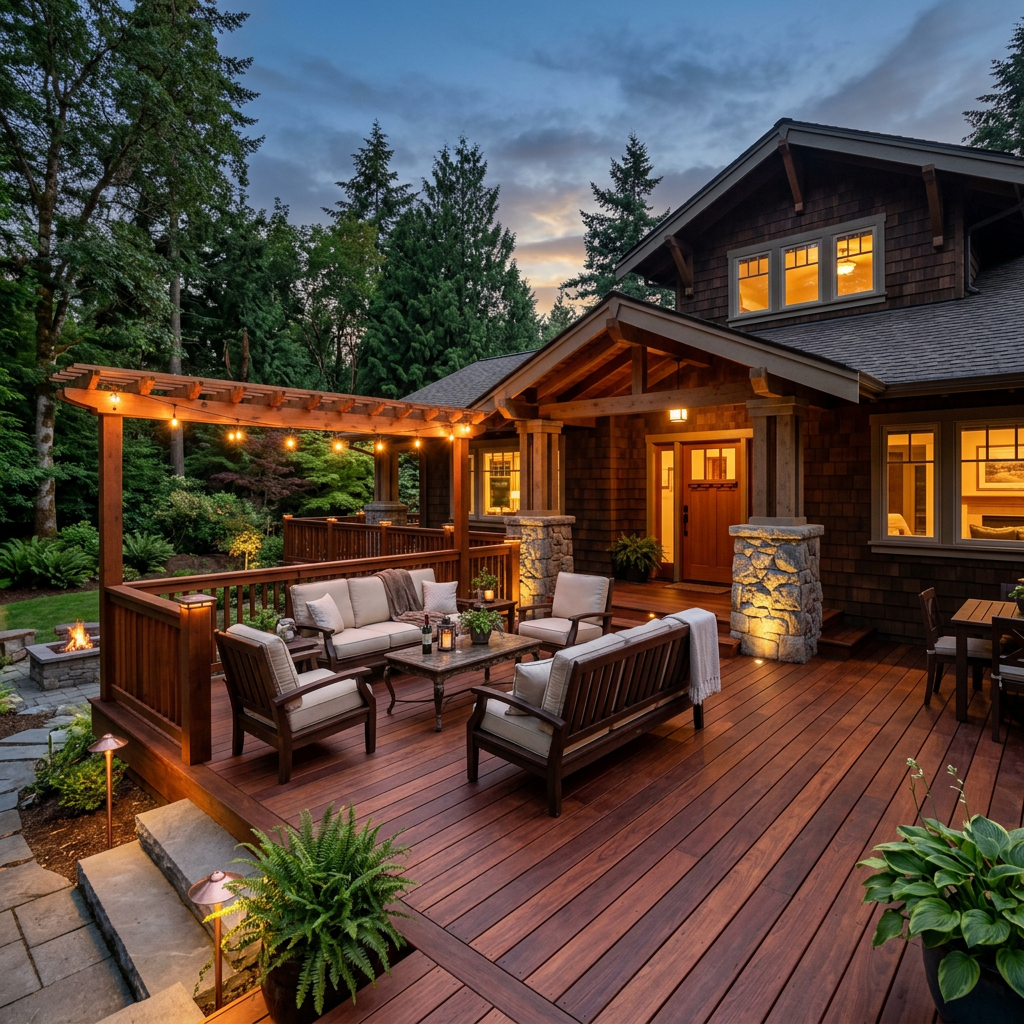
Massaranduba decking — known in the trade as Brazilian Redwood — combines Ipe-level density and durability with a uniquely deep reddish-brown color that no other hardwood species can match. For homeowners drawn to the warm, rich aesthetics of California redwood but frustrated by its limited outdoor lifespan, Massaranduba delivers the same visual warmth with five times the durability.
With a Janka hardness of 3,190 lbf, Massaranduba ranks among the hardest commercially available decking species, surpassing Tigerwood, Garapa, and most other tropical hardwoods. Only Ipe and Cumaru are harder. This extreme density translates to exceptional scratch resistance, structural integrity, and a 50+ year outdoor lifespan — all without chemical treatment. Massaranduba's Class A fire rating and Class 1 durability classification confirm its position as a genuinely premium decking material.
The defining visual characteristic of Massaranduba is its deep, saturated reddish-brown color — a true redwood tone that distinguishes it from the browner hues of Ipe and the warmer tan of Cumaru. This rich red color is remarkably consistent across boards, giving Massaranduba decks a cohesive, elegant appearance. Like all tropical hardwoods, untreated boards will weather to silver-gray over time, or the original red can be maintained with annual UV-protective oil application.
Massaranduba is an excellent choice for residential decks, elevated terraces, and outdoor living spaces where the homeowner wants a warm, inviting color palette. It performs particularly well in traditional and craftsman-style homes where the redwood aesthetic complements the architecture. The species is also popular for commercial applications where both appearance and performance are non-negotiable.
In terms of value, Massaranduba offers a compelling proposition: near-Ipe performance at a more accessible price point, with a distinctive color that neither Ipe nor Cumaru can provide. Compared to domestic redwood, the difference is dramatic — Massaranduba is roughly seven times harder and lasts four to five times longer. Against composite decking, Massaranduba offers natural beauty, superior longevity, and better long-term economics. Massaranduba is harvested from managed forests throughout northern South America.
Massaranduba Decking Specifications
| Botanical Name | Manilkara bidentata |
| Common Names | Massaranduba, Brazilian Redwood, Bulletwood |
| Janka Hardness | 3,190 lbf |
| Density | 68 lbs/ft³ |
| Durability Class | Class 1 |
| Fire Rating | Class A (ASTM E84) |
| Rot Resistance | Excellent |
| Insect Resistance | Excellent |
| Expected Lifespan | Up to 50+ years |
| Color (Fresh) | Deep reddish-brown (redwood color) |
| Color (Weathered) | Silver-gray patina |
| Available Thicknesses | 1x, 5/4, 2x |
| Available Widths | 4", 6" |
| Profiles | Pregrooved, Eased Edge (E4E), T&G |
| Origin | South America (Brazil, Guyana, Suriname) |
Available Massaranduba Decking Sizes
Installation & Maintenance Guide
Massaranduba Installation Tips
Massaranduba is extremely dense and requires pre-drilling with carbide-tipped drill bits. Stainless steel fasteners are mandatory. The wood's high density makes it challenging to work with — plan for slower cutting and drilling rates similar to Ipe. Hidden fastener systems work well with pregrooved boards. Standard 16" joist spacing recommended.
- Pre-drilling required for all screw holes
- 16" on-center joist spacing for standard residential installations
- Stainless steel fasteners required — no galvanized or zinc-coated
- Acclimate boards on-site before installation
Maintenance Options
Oil for color: Apply UV-protective oil annually to maintain the natural deep reddish-brown (redwood color) tones. See our massaranduba deck maintenance guide for product recommendations.
Let it gray: No treatment needed — Massaranduba will weather to a beautiful silver-gray patina with zero impact on durability.
How Massaranduba Compares
Massaranduba vs Ipe
Ipe is slightly harder (3,680 vs 3,190 Janka) and lasts longer (up to 75+ vs 50+ years). Massaranduba offers a distinctive deep red color that Ipe lacks, at a better price point — true Ipe-class density with unique aesthetics.
Learn more about Ipe deckingMassaranduba vs Cumaru
Cumaru is slightly harder (3,330 vs 3,190 Janka) but has warm brown tones. Massaranduba's deep red color is unique among premium hardwoods. Both offer up to 50+ year lifespans and Class 1 durability.
Learn more about Cumaru deckingMassaranduba vs Redwood (Domestic)
California redwood shares Massaranduba's warm red color but is dramatically less durable (450 vs 3,190 Janka) and lasts only 10-15 years. Massaranduba is the premium upgrade for redwood lovers.
Massaranduba Decking FAQ
All Massaranduba Decking Sizes & Profiles
Every available massaranduba decking product — click to view pricing and details.
Explore More Decking
All Hardwood Decking
Browse all species
Ipe Decking
Shop ipe decking
Cumaru Decking
Shop cumaru decking
Tigerwood Decking
Shop tigerwood decking
Garapa Decking
Shop garapa decking
Red Balau Decking
Shop red balau decking
About Massaranduba Wood
Species information & properties
All Hardwood Species
Compare all species