.png?width=180&quality=75&format=webp)
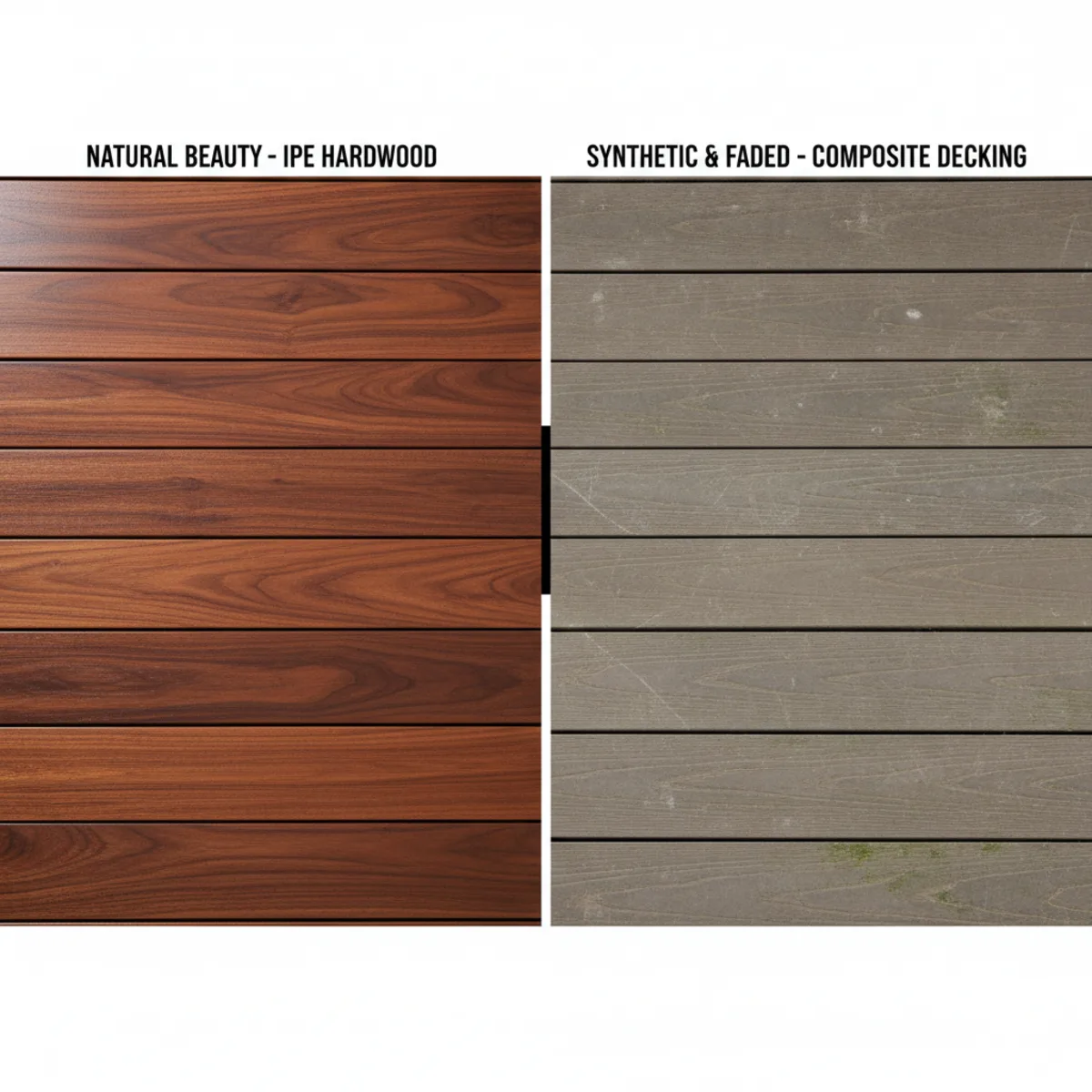
Natural Hardwood vs. Plastic Composites
Before you spend thousands on a "maintenance-free" plastic deck, discover the hidden realities of heat retention, warranty loopholes, and why natural Ipe remains the gold standard.
Compare Specific Brands
Ipe vs Trex®
Known for market leadership, with past litigation involving earlier composite generations.
Ipe vs TimberTech® PRO®
Premium-priced, with labor coverage limited under certain warranty terms.
Ipe vs AZEK® (PVC)
Higher thermal movement typical of PVC products.
Ipe vs Fiberon®
Earlier-generation composite products in the industry were subject to mold-related complaints.
Ipe vs MoistureShield®
Like most synthetics, surface temperatures vary by color and sun exposure.
Common Trade-Offs with Composite & PVC Decking
Before investing in a "low-maintenance" synthetic deck, it’s important to understand the trade-offs between natural hardwood and composite/PVC materials — including heat retention, repairability, warranty structure, and long-term lifecycle costs.
Surface Heat
Darker synthetic decking can exceed 130–140°F in direct summer sun depending on climate and color, which may be uncomfortable for bare feet. Manufacturers note that decking can become hot in high temperatures. Natural hardwood also warms in the sun, though many homeowners report it cools more quickly once shaded.
Repairability
Deep gouges or melt damage on composite decking typically require board replacement because the surface cannot be refinished like hardwood. Ipe can be sanded and refinished if scratched.
Warranty Structure
Most synthetic decking warranties cover material defects for 25–50 years depending on product line. Labor, demolition, and disposal are often excluded or limited, meaning replacement costs may extend beyond material coverage.
Environmental Considerations
Composite decking uses recycled plastics and wood fiber, reducing demand for virgin materials. However, end-of-life recycling options for wood-plastic composites remain limited in many regions, meaning a significant portion may still end up in landfills. When sourced from responsibly managed forests, Ipe is a renewable natural wood product that stores carbon during its service life and biodegrades at end of life.
Frequently Asked Questions
Composite decking is made of plastic (either mixed with wood flour or 100% PVC). Plastic is naturally insulative, meaning it traps heat rather than dispersing it. In direct summer sun, darker composite decking surfaces can exceed 130–140°F in some climates, which may be uncomfortable for bare feet. Actual surface temperatures vary by color, airflow, and region. Natural wood like Ipe disperses heat much more effectively.
No. While it doesn't need sanding or sealing, it still requires regular cleaning to prevent mold and mildew growth, especially in the embossed grain patterns. Furthermore, deep scratches, gouges, or melt damage on composite decking typically require board replacement, as the surface cannot be refinished like hardwood.
Some brands use recycled materials to manufacture the boards. However, end-of-life recycling options for wood-plastic composites remain limited in many regions, meaning a significant portion may still end up in landfills. When sourced from responsibly managed forests, Ipe is a renewable natural wood product that stores carbon during its service life and biodegrades at end of life.
Yes. While modern 'capped' composites resist fading better than older generations, they will still lighten over time due to UV exposure. Unlike wood, which can be oiled to restore its original color, faded plastic cannot be brought back to its original vibrancy.
Deck replacement is expensive. Manufacturers know that if their product fails, the cost to tear it out and dispose of it is often higher than the material cost itself. By excluding labor from their warranties, they limit their financial liability while still marketing '25-50 year' coverage.
Disclaimer & Legal Notice
The information provided on this page, including pricing, warranties, product specifications, and legal history, is compiled from publicly available sources, manufacturer websites, consumer reviews, and public court records as of early 2026. While we strive to maintain accurate and up-to-date information, manufacturers frequently change product formulations, warranty terms, and pricing. Ipe Woods USA makes no guarantees regarding the absolute accuracy or current validity of third-party product specifications.
All brand names, product names, trademarks, and logos mentioned (including but not limited to Trex®, TimberTech®, AZEK®, Fiberon®, and MoistureShield®) are the property of their respective owners. Ipe Woods USA is an independent supplier of natural hardwood lumber and is not affiliated with, endorsed by, or sponsored by any of the composite or PVC decking manufacturers discussed.
References to class-action lawsuits, product failures, and warranty limitations are based on documented historical events and consumer reports. They are intended for educational and comparative purposes only. Consumers are strongly encouraged to conduct their own independent research, read complete manufacturer warranty documents, and consult with certified professionals before making any purchasing decisions.