.png?width=180&quality=75&format=webp)
Tigerwood Decking, Ipe or Cumaru: Best Tropical Decking Options
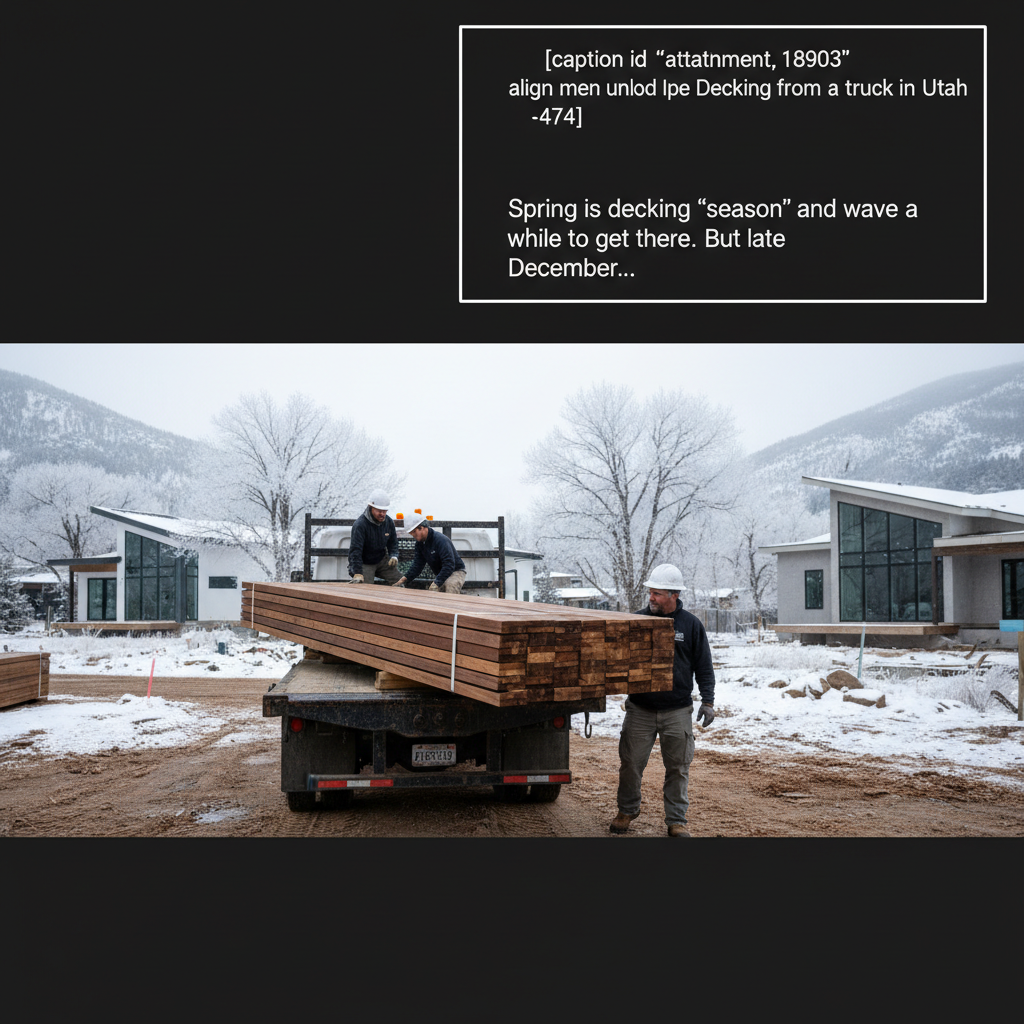
[caption id="attachment_18903" align="alignright" width="474"] Two men unload Ipe Decking from a truck in Utah.[/caption] Spring is decking “season” and we have a while to get there. But late December...
Tigerwood Decking, Ipe, or Cumaru: The Best Tropical Decking Options
As spring approaches, many homeowners begin to think about transforming their outdoor spaces with beautiful decking. Late December is the perfect time to plan and consider the type of wood to use for your next decking project. During the spring, mills focus heavily on producing Ipe decking boards designed for hidden fasteners. Our trucks are often loaded with Cumaru, Ipe, or Tigerwood decking, dispatched across the country or even shipped overseas, depending on customer requests.
While Ipe remains the premier decking material due to its unparalleled durability, its escalating price is prompting many to explore alternative options. In this article, we will highlight several high-quality tropical decking species, offering insight into their unique characteristics, helping you make an informed decision for your next project.
Ipe Alternatives
Red Balau Decking
Red Balau is a highly workable alternative to many tropical hardwoods. Belonging to the Shorea genus, it shares similarities in texture and hue with Mahogany. This species is known for its remarkable durability and consistent color patterns, making it an appealing choice for homeowners. Best of all, it typically costs half the price of Ipe, making it an attractive option in the realm of tropical decking. However, locating Red Balau may pose challenges as it is not as readily available as Ipe or Cumaru.
Jatoba
Commonly referred to as Brazilian Cherry, Jatoba is famed for its extreme hardness, making it an excellent option not just for decks but also for interior flooring. Its resistance to insects and rot enhances its stability, while exposure to sunlight deepens its vibrant red color over time. This color transition allows for harmonizing your outdoor deck with your interior flooring, creating a cohesive look throughout your home.
Tigerwood Decking
Tigerwood decking is also known as Goncalo Alves, which features a stunning brownish-orange hue with dark, tiger-like stripes. Over time, it can develop a deeper reddish-brown color. While Tigerwood is known for its excellent drying and weather resistance, kiln drying is necessary to achieve optimal stability. Although Tigerwood is primarily used for decking, it can also enhance interior spaces. Its unique striped pattern can, however, make it challenging to achieve a uniform appearance. Additionally, while the smooth surface is a pleasure underfoot, it can be slippery in wet conditions.
Massaranduba Brazilian Redwood Decking
Massaranduba decking, or Brazilian Redwood, boasts density and hardness, making it suitable for various climates, especially in the Rockies and the Southwest. Though it is slightly less hard than Ipe (about 20% softer), it still offers impressive durability. Its straight grain and red color can transition to a brown over time. Popular in Europe for its stability in wet conditions, Massaranduba is a compelling option for specific climates. Its pricing is generally on par with Cumaru, which adds to its accessibility.
Garapa Decking
Garapa decking, also known as Brazilian Oak, is recognized for its lemon-yellow appearance and durability. While it is stable and easier to work with than many domestic species, its color does not appeal to all homeowners. Nevertheless, it is approximately 40% less hard than Ipe, making it a solid choice for decking applications. Homeowners often address color preferences through staining or dyeing, achieving a look similar to Ipe with Garapa.
Cambara Decking
Cambara is frequently categorized alongside Mahogany due to its reddish-brown hue and open grain. However, Cambara is not commonly advisable for new decking projects because of its inconsistent availability and quality. It's mentioned here mainly as a reminder of past usage rather than as a current viable option for decking.
Choosing the Perfect Wood for Your Deck
When comparing Cumaru decking against Ipe decking, it's crucial to note that while Ipe remains a top choice for hardwood decking, we also supply a range of other tropical hardwoods, including Cumaru, Red Balau, Tigerwood, and Jatoba, in various sizes. While our stock of Tigerwood is limited, we can source it based on customer requests. We understand that our clients seek workable hardwood species, and we accommodate their demands with a readiness to stock various options.
In our years of supplying decking materials, Ipe has continuously positioned itself as an outstanding product. However, the rising costs have prompted us to stock a broader selection of alternatives, and we are glad to see our clients appreciating these options. We also handle specific requests for unique types of wood, ensuring that we meet our customers' needs.
All the species mentioned serve distinct purposes, and our goal is to help clients understand why a particular wood may suit their decking project best. The factors involved in constructing a deck are numerous, which is why we recommend working with our experts to select the ideal tropical decking species for your specific situation.
Ready to Start Your Hardwood Project?
Browse our selection of premium Brazilian hardwoods or talk to a specialist.