.png?width=140&quality=70)
This is an educational guide. For species details, see our Ipe wood species page.
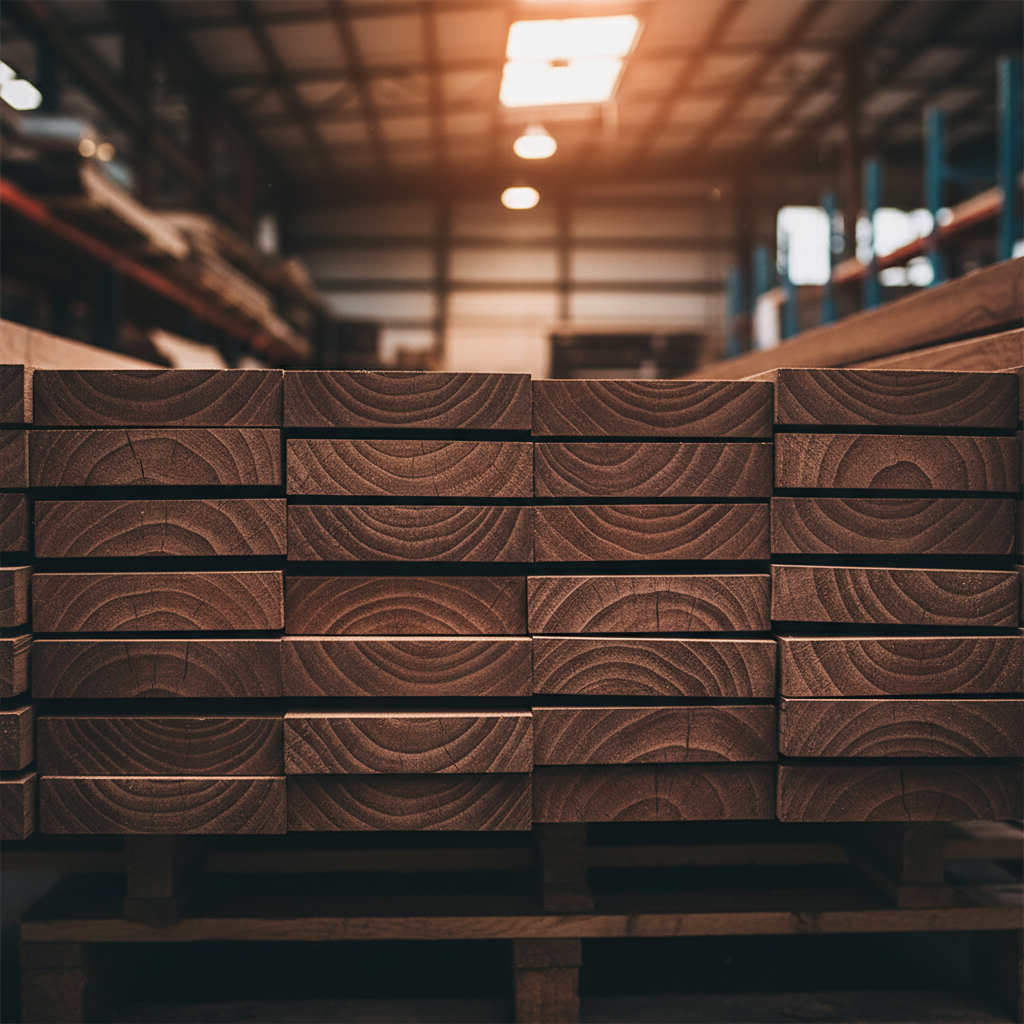
What Is Ipe Wood? A Beginner's Guide
Ipe wood (pronounced "E-pay") is a dense tropical hardwood from South America known for exceptional durability, natural rot resistance, and an up to 75+ year outdoor lifespan. This page explains what Ipe is, how it behaves, and why it is used in demanding exterior projects.
3,680
Janka (lbf)
75+
Year Lifespan
Class A
Fire Rating
Class 1
Durability
How Do You Pronounce Ipe? (And Common Misspellings)
Ipe is pronounced "E-pay" (two syllables, rhymes with "ee-pay"). In Portuguese it's written Ipê with an accent. Because the spelling is unusual in English, people frequently search for Ipe using misspelled or phonetic variations. All of these refer to the same Brazilian hardwood:
Common Misspellings & Alternate Searches
All of these refer to Ipe (Handroanthus spp.), the same species. Learn more on our Ipe wood species page.
Ipe Definition & Origin
Ipe (pronounced "E-pay") is a genus of extremely dense, durable hardwoods in the Handroanthus family (formerly classified as Tabebuia). Native to the tropical forests of Brazil, Bolivia, Peru, and other parts of Central and South America, Ipe trees grow naturally alongside other rainforest species and can reach heights of 100–130 feet with trunk diameters of 2–4 feet. For detailed product specifications and live pricing, see our ipe hardwood species page.
Also known as Brazilian Walnut, Lapacho, or Ironwood, Ipe has been used for centuries in South America for bridges, railroad ties, docks, and heavy construction — applications that demand decades of performance without maintenance. In recent decades, it has become the premium choice for residential and commercial decking, siding, and outdoor construction throughout North America and Europe.
What makes Ipe unique among woods is its combination of extreme hardness (3,680 lbf on the Janka hardness scale — nearly 3× harder than Red Oak), natural resistance to rot, insects, and fire, and dimensional stability that minimizes warping and cupping. Unlike pressure-treated lumber or composite decking, Ipe achieves this performance through its natural density and chemistry — no chemical treatment is needed. Browse ipe decking boards with live pricing, or check available ipe wood sizes.
Ipe Properties & Technical Data
Verified specifications from the USDA Forest Products Laboratory Wood Handbook and ASTM testing standards. For downloadable PDFs, visit our Technical Data Sheets page.
| Property | Value |
|---|---|
| Scientific Name | Handroanthus spp. (formerly Tabebuia) |
| Common Names | Ipe, Brazilian Walnut, Lapacho, Pau Lope, Ironwood |
| Janka Hardness | 3,680 lbf — one of the hardest woods globally |
| Density | 66 lbs/ft³ (1,050 kg/m³) — sinks in water |
| Modulus of Rupture (MOR) | 25,660 psi — exceptional bending strength |
| Durability Class | Class 1 (highest) — 25+ years in-ground contact |
| Rot Resistance | Excellent — no chemical treatment required |
| Insect Resistance | Excellent — naturally repels termites and marine borers |
| Fire Rating | Class A (ASTM E84) — highest flame-spread rating |
| Dimensional Stability | Very stable — minimal expansion/contraction |
| Expected Outdoor Lifespan | Up to 75+ years with proper installation |
| Density (alternate) | ~1.05 g/cm³ |
| Color (fresh-cut) | Olive-brown to dark chocolate-brown |
| Color (weathered) | Silver-gray patina (cosmetic only) |
| Grain | Fine, interlocked — naturally slip-resistant surface |
| Origin | Central & South America (Brazil, Bolivia, Peru) |
| Sustainability | CITES Appendix II — regulated, legal trade |
Sources: USDA FPL Wood Handbook, ASTM D143, ASTM E84. Values represent species averages.
What Is Ipe Used For? Common Applications
Ipe's unique combination of hardness, natural durability, and aesthetic beauty makes it the top choice for demanding outdoor applications. Here are the most common uses:
Residential Applications
- Decking: Backyard decks, rooftop decks, pool surrounds
- Siding: Exterior cladding, rainscreen, accent walls
- Fencing: Privacy fencing that outlasts cedar 5:1
- Stairs & Railing: Outdoor stair treads, handrails, railing systems
- Outdoor furniture: Benches, tables, pergolas, arbors
Commercial & Marine
- Boardwalks: Public parks, beach access, nature trails (Coney Island, Atlantic City)
- Marine docks: Boat docks, piers, waterfront structures
- Bridges: Pedestrian and vehicular timber bridges
- High-traffic: Hotels, resorts, shopping centers, restaurants
- Heavy timbers: Structural posts, beams, heavy timbers
Ipe Wood: Pros and Cons
Ipe's core advantages are its extreme longevity (75+ years), a 3,684 lbf Janka hardness rating, Class A fire resistance, and natural immunity to rot and insects — all without chemical treatment. Its main considerations are a higher upfront cost and the need for pre-drilling during installation.
Key Advantages
- ✓ Up to 75+ year outdoor lifespan
- ✓ Janka hardness: 3,684 lbf — 3× harder than Red Oak
- ✓ Class A fire rated (same as concrete and steel)
- ✓ Naturally rot, decay, and insect resistant
- ✓ No staining or sealing required
Considerations
- ⚠ Higher upfront cost vs pressure-treated or composite
- ⚠ Requires pre-drilling to prevent splitting
- ⚠ Heavy (69 lbs/ft³) — plan for structural support
- ⚠ Weathers to silver-gray without UV oil maintenance
For detailed species data, see our Ipe wood species page.
How Ipe Weathers: Gray Patina vs Oiled Finish
One of the most common questions about Ipe is what happens to its color over time. The answer depends entirely on whether you choose to oil it or let it weather naturally — both options are valid, and neither affects structural performance.
🪵 Natural Silver-Gray Patina
- • Develops over 6–12 months of UV exposure
- • Zero maintenance required — truly "install and forget"
- • Wood remains equally durable and structurally sound
- • Uniform silver tone once fully weathered
- • Preferred by many architects for its clean, natural aesthetic
🎨 Maintained Brown Color
- • Apply UV-protective penetrating oil 1–2× per year
- • Never use film-forming sealers — they peel on dense hardwood
- • Preserves the rich chocolate-brown tones
- • First year: oil 2–3× as wood acclimates
- • High-UV climates may need twice-yearly application
Many homeowners start by maintaining the brown color, then transition to natural graying once they appreciate the silver patina. Either path keeps your Ipe structurally sound for decades. For detailed instructions, see our Deck Maintenance Guide.
Ipe's Natural Color Range
Fresh-cut Ipe displays beautiful variation from olive-brown to deep chocolate — every board is unique.

Ipe vs Composite Decking
| Feature | Ipe Hardwood | Composite |
|---|---|---|
| Material | Natural tropical hardwood | Plastic & wood fiber blend |
| Lifespan | Up to 75+ years | 15–25 years (warranty-dependent) |
| Surface Temp (sun) | Stays cooler | Gets very hot — can burn feet |
| Scratch Resistance | 3,680 lbf Janka — extremely resistant | Scratches and dents easily |
| Fire Rating | Class A (ASTM E84) | Class C flame spread (ASTM E84) |
| Maintenance | Optional oiling for color | Cleaning, fading, staining |
| Environmental | Natural, renewable resource | Plastic-based, not biodegradable |
| 50-Year Cost | Lower — no replacement | Higher — 2–3 replacements |
For a full breakdown, read our Ipe vs Trex comparison. See how Ipe stacks up against every major material in our best decking material comparison.
Ipe vs Cumaru vs Garapa vs Teak
| Species | Janka | Color | Best For |
|---|---|---|---|
| Ipe | 3,684 lbf | Chocolate-brown | Maximum durability, high-traffic, marine |
| Cumaru | 3,540 lbf | Reddish-brown | Best-value Ipe alternative |
| Garapa | 1,510 lbf | Golden-yellow | Lighter color, easier workability |
| Teak | 1,155 lbf | Golden-brown | Marine furniture, higher price point |
See our full hardwood comparison or Janka Hardness Scale for complete data.
Frequently Asked Questions About Ipe
Answers based on USDA research, ASTM standards, and 8+ years of hardwood industry experience.
How do you pronounce Ipe?
Does Ipe need sealing or staining?
Why does Ipe crack? Is surface checking normal?
How long does Ipe wood last outdoors?
Is Ipe slippery when wet?
Is Ipe sustainably sourced?
Is Ipe wood hard to work with?
What is the Janka hardness of Ipe?
How does Ipe compare to composite decking?
What causes Ipe's chocolate-brown color?
Related Ipe Guides & Resources
How Long Does Ipe Last? (Primary Lifespan Guide)
Main page for Ipe lifespan, 75+ year durability, and longevity factors
Origins of Ipe Wood
Where Ipe grows, harvesting, and sustainability
Ipe Wood Sizes & Pricing
Product page for sizes, profiles, and live Ipe wood pricing
Ipe Decking Options
Dedicated page for Ipe decking applications and buying paths
Ipe Decking Installation Guide
Step-by-step installation with tool list and joist spacing
Deck Maintenance & Care
Cleaning, oiling, and long-term protection tips
Ipe Checking & Cracking
Why checking happens and how to minimize it
Hidden Fastener Comparison
Ipe Clip vs Camo vs EdgeClip side-by-side
Janka Hardness Scale
Compare 35+ wood species by surface hardness
Wood Acclimation Guide
Why acclimation matters and how to do it right
Ipe vs Trex Composite
Hardwood vs composite cost, durability & lifespan
Ipe vs Cumaru Comparison
Which Brazilian hardwood is right for you?
Ipe vs Other Hardwoods
Strength and durability comparison chart
Ipe Decking Alternatives
Cumaru, Tigerwood, Garapa & Massaranduba compared
Ipe Wood Sizes Guide
Available dimensions, nominal vs actual sizing
Sanding an Ipe Deck
When, how, and what grit to use on Ipe
Ipe Decking Problems
Common issues and how to prevent them
Air-Dried vs Kiln-Dried
Moisture content, pros/cons, and which to choose
Lumber Grades Explained
FAS, Select & Better, Mill Run — what they mean
Lumber Lengths Guide
Random vs specific lengths and planning tips
Decking Calculators
Estimate materials, fasteners, and sealer quantities
Acclimation Calculator
Calculate acclimation time for your climate
Fastening Systems Comparison
All deck fastener types compared side by side
Coating & Finishing Options
Pre-coated vs on-site finishing explained
Custom Milling Services
Custom profiles, rainscreen, T&G, and more
Shipping & Delivery Info
LTL freight, terminal pickup, and delivery options
Contractor & Pro Resources
Quick sheets, span charts, and client handouts
All Resources & Guides
Complete library of hardwood guides and tools
Hardwood News & Blog
Latest articles, tips, and industry updates
Continue reading: Ipe wood species page · Janka Hardness Scale · Deck Installation Guide