.png?width=180&quality=75&format=webp)
Hardwood Acclimation Guide
Proper acclimation is critical for tropical hardwood installation success
Why Acclimation Matters
Hardwood needs to acclimate to the local conditions (humidity and temperature). As noted in the USDA Wood Handbook, wood is hygroscopic — it absorbs and releases moisture until reaching equilibrium with its environment. This means it needs to sit near where you will be installing it to adjust to its new climate. Local climate data from NOAA can help you understand your region's humidity patterns.
Leave it there for at least seven (7) days or longer if you are in a drier climate. If it is not interacting with the environment, it is not acclimating!
Don't store hardwood for any more than 28 days without checking with us at Ipe Woods USA for additional handling tips.
Acclimation by Species
Ipe Acclimation Requirements
Species Notes:
Extremely dense - requires longer acclimation in dry climates. Monitor closely for the first 2 weeks.
How to Acclimate Your Wood - Do's and Don'ts
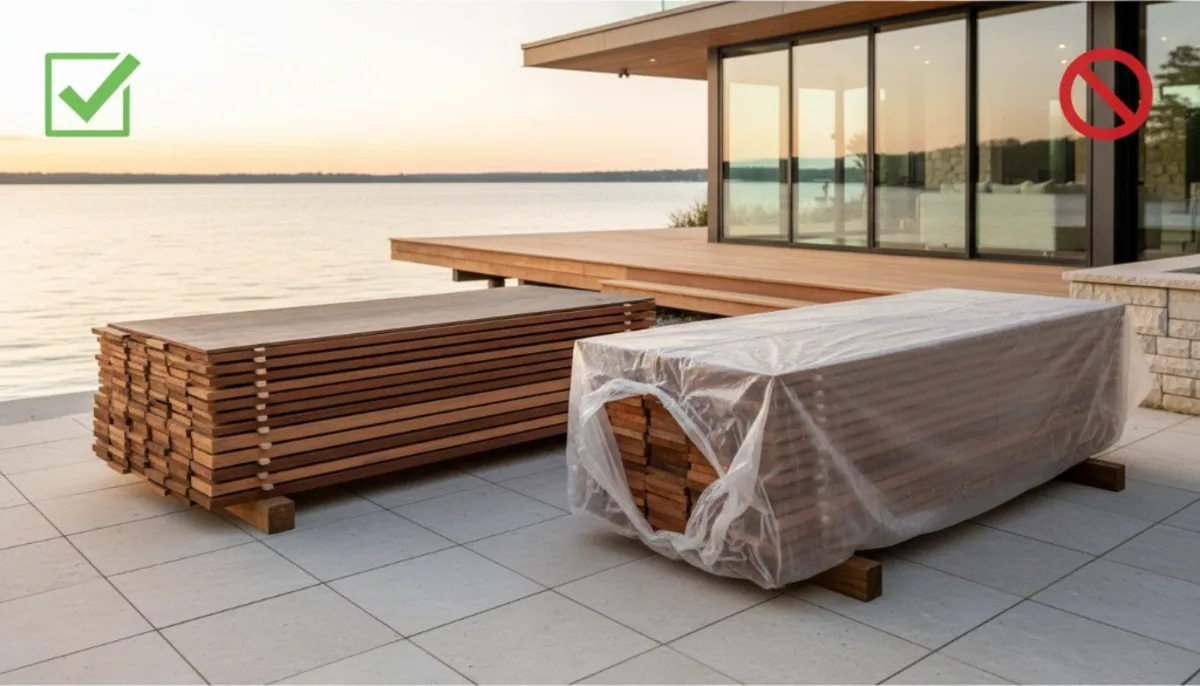
Store wood on blocks minimum 12 inches from the ground for ventilation
Cover with plywood during acclimation
DO NOT cover with tarps or plastic - these trap moisture
Air wood outside - never in enclosed spaces like garages
Separate rows of boards with wooden shims for air circulation
Never store for more than 28 days without consulting us
Do not store directly on ground or concrete blocks
Proper Acclimation Setup
Correct Method
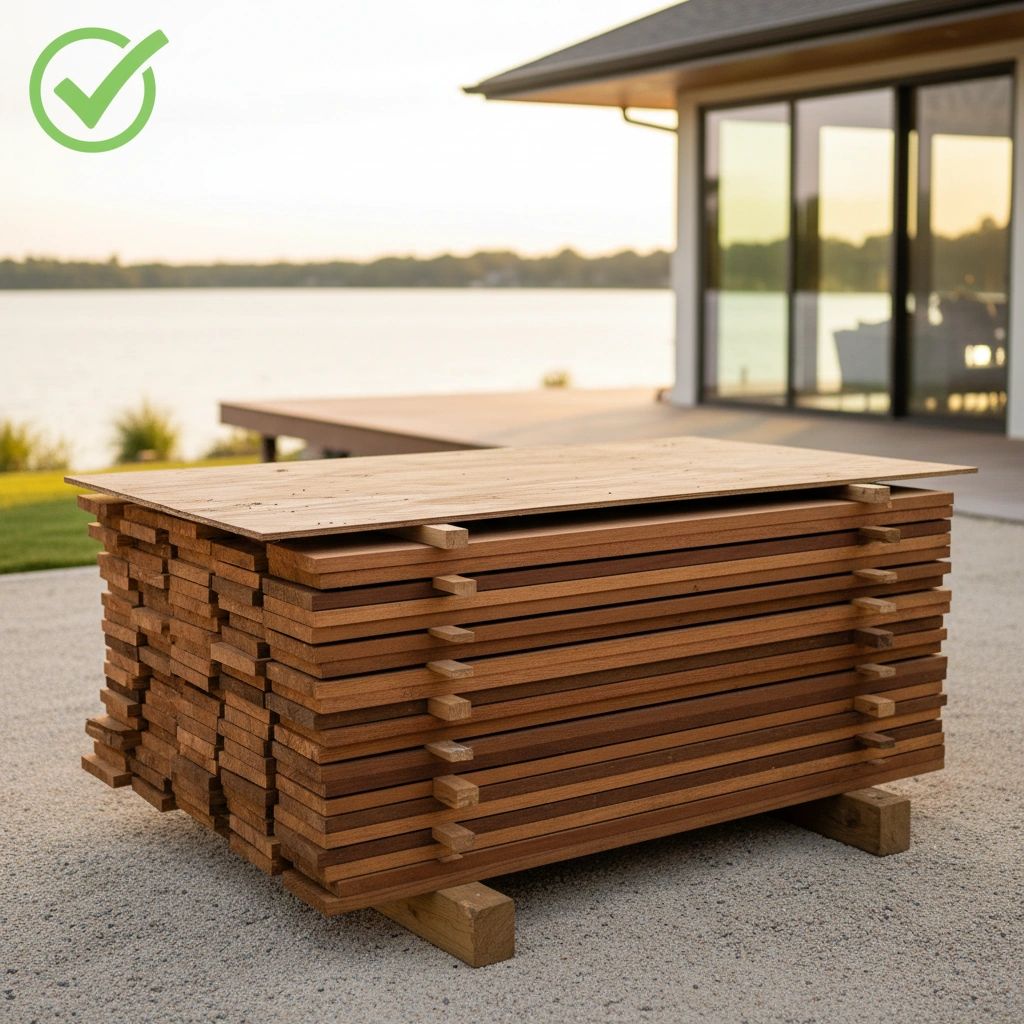
- Elevated 12"+ from ground on blocks
- Wooden shims between board layers
- Plywood cover (no plastic/tarps)
- Full air circulation on all sides
- Stored outdoors near installation site
Common Mistakes
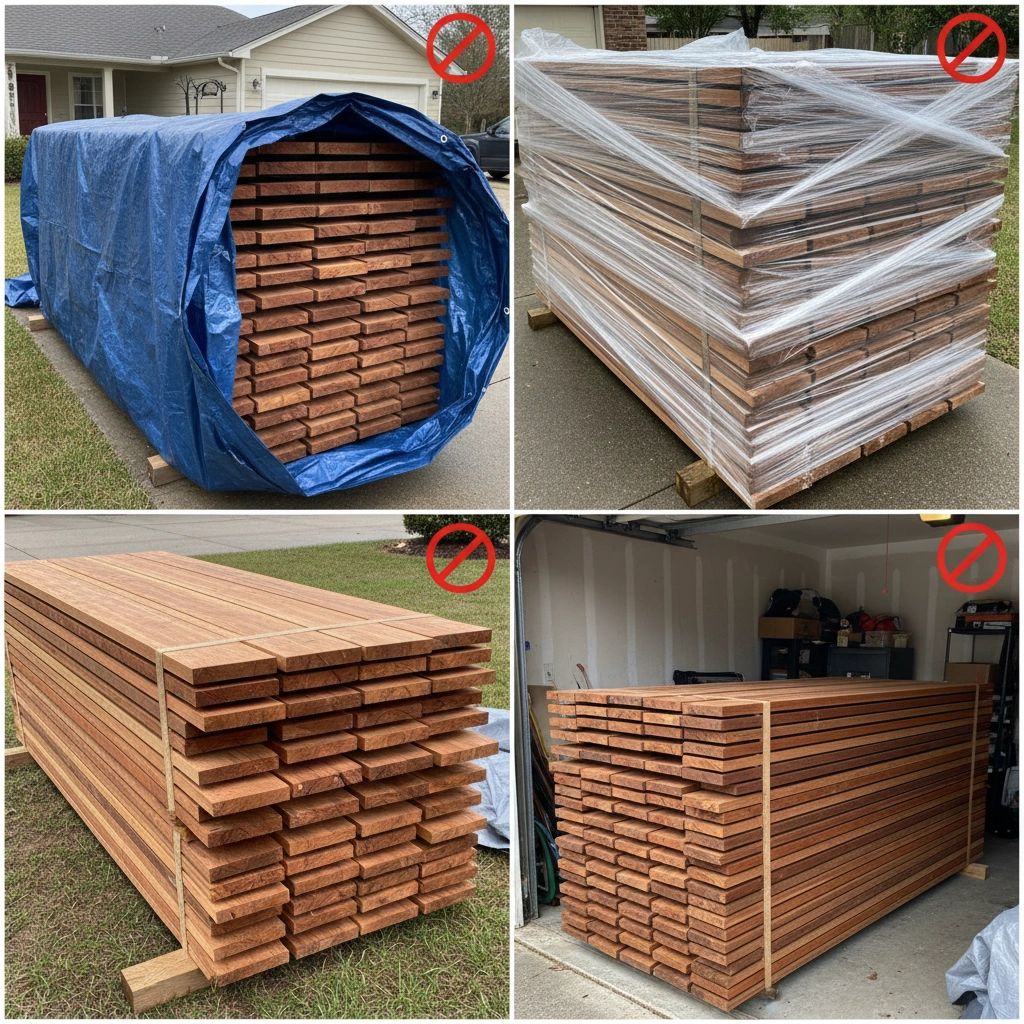
- Storing in garage or enclosed space
- Using plastic tarps (traps moisture)
- Placing directly on concrete or ground
- Stacking without spacers between layers
- Storing for 28+ days without consultation
Climate-Specific Guidelines
Humid Climates
Minimum: 7 days
Higher humidity means wood adjusts faster. Standard acclimation period usually sufficient.
Dry Climates
Minimum: 10-14 days
Low humidity requires extended acclimation. Dense species like Ipe and Massaranduba need the full 14 days.
Moderate Climates
Minimum: 7-10 days
Balanced humidity makes acclimation predictable. 7-10 days works for most species.
What Happens Without Proper Acclimation?
Cupping
Boards can cup (edges higher than center) when moisture content changes rapidly after installation.
Excessive Gaps
Wood shrinks as it dries. Installing before acclimation can result in gaps wider than planned.
Warping
Rapid moisture changes cause boards to twist and warp, creating uneven surfaces.
Buckling
Boards may buckle if they swell after installation due to moisture absorption.
Step-by-Step Acclimation Process
Choose Location
Select an outdoor location near your installation site. The wood must be exposed to the same environmental conditions it will face once installed.
Prepare Foundation
Place wooden blocks or 4x4 supports at least 12 inches above the ground. Never place wood directly on ground, grass, or concrete.
Stack with Spacers
Stack boards horizontally with wooden shims or spacers between each layer. This allows air to circulate around every board surface. The more air can move around the boards before installation, the more acclimated the wood will be.
Cover Properly
Cover the stack with plywood to protect from direct rain while allowing air circulation. DO NOT use plastic tarps or sheeting - these trap water and moisture, creating stability issues. The wood must be kept dry until installation.
Monitor Duration
Wait minimum 7 days (14+ for dry climates). Check wood regularly. Never store for more than 28 days without contacting Ipe Woods USA for guidance.
Long-Term Storage: Don't Leave Tropical Hardwood Unbundled
Tropical hardwood is not meant to sit unbundled for long periods before installation
Once boards are loose and exposed, they can begin responding to the environment unevenly—especially in areas with dry air, high heat, wind, or direct sunlight.
Bundling is not just for shipping—it helps keep boards supported, protected, and stable. When boards are left unbundled without consistent stacking, weight, and protection, they are far more likely to shift in ways that affect installation quality.
Why Unbundled Long-Term Storage is a Problem
Extended loose storage can lead to:
- Warping, bowing, twisting, or cupping from uneven moisture change
- End checking (small cracks at the ends caused by rapid drying)
- Uneven weathering or discoloration from sun exposure
- Higher waste and more board sorting during install
- More difficult fastening and tighter alignment issues
These issues can develop faster than most people expect, especially when boards are stored outdoors or in a space with uncontrolled airflow and temperature swings.
Best Practice for Long-Term Storage
If you are not installing right away, keep material:
- Bundled or tightly re-strapped
- Stacked flat with full support
- Stored in a shaded, dry location
- Weighted down to prevent movement
- Off the ground and protected from sun and rain
Proper long-term storage protects the straightness and consistency of the boards and helps ensure a smoother installation when you're ready.
Important Disclaimer
The information provided on this page is for general guidance only. We strongly recommend having an on-site professional, contractor, or experienced installer available to assess your specific climate, wood species, and project conditions.
Ipe Woods USA is not responsible for issues arising from improper storage, acclimation, or installation. Always consult with qualified professionals for your specific situation.
Hardwood Acclimation Time Calculator
Estimate exactly how long your tropical hardwood needs to acclimate before installation, based on your local climate, wood species, and board thickness.
How the Calculator Works
Our acclimation calculator uses your ZIP code to look up local humidity and temperature data, then combines it with your wood species, board thickness, and storage conditions to generate a personalized acclimation timeline.
You'll receive an estimated number of days, a target moisture content range, and a readiness checklist — so you know exactly when your hardwood is ready to install.
Factors Considered
- Local climate — uses your ZIP code for humidity and temperature
- Season — accounts for installation month and seasonal changes
- Board thickness — adjusts for 1x, 5/4, 2x, and 4x+ lumber
- Storage setup — considers sun exposure and stacking method