.png?width=180&quality=75&format=webp)
Why Choose Jatoba for Soffit & Ceilings
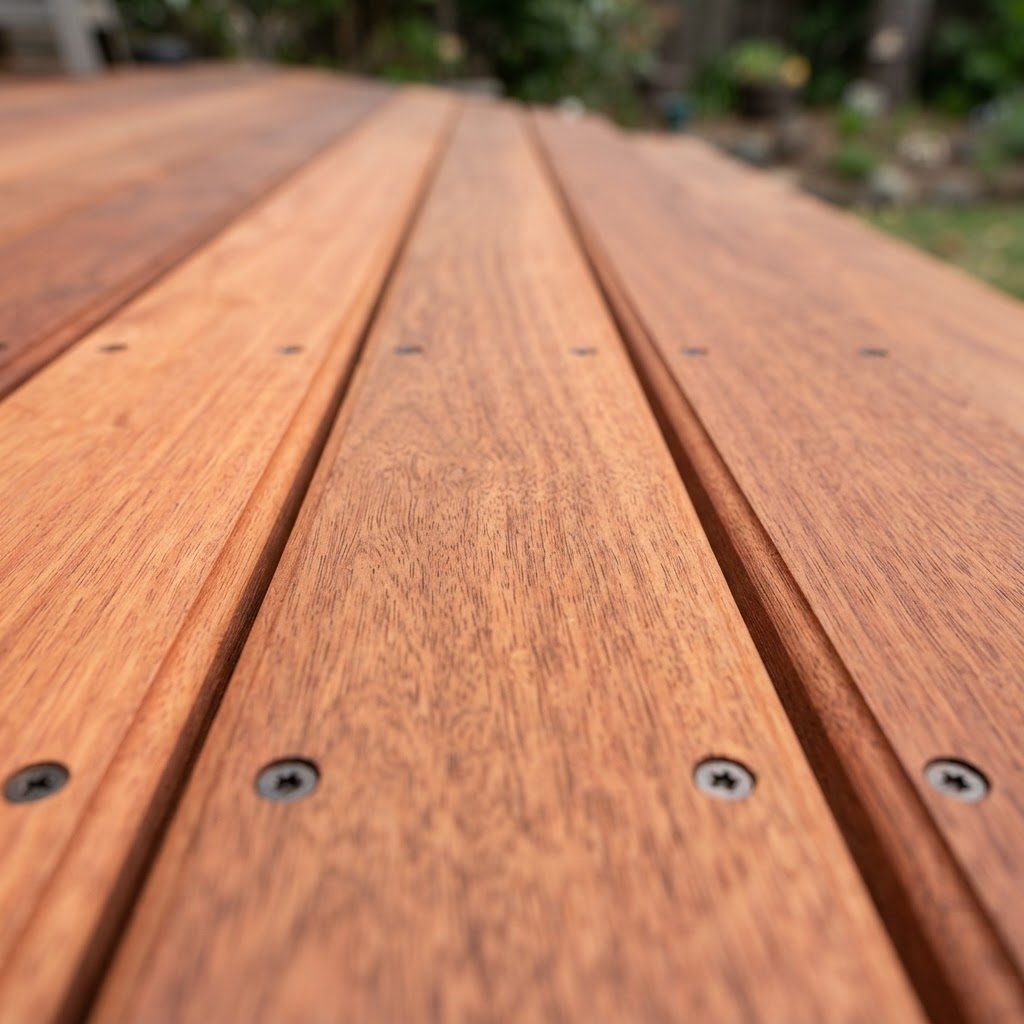
Jatoba soffit is one of the most rewarding places to use Brazilian Cherry. A porch ceiling or eave is protected from direct rain and harsh UV, which means the wood keeps its deep reddish-brown color far longer than it would on a deck — and Jatoba's color is exactly what people want overhead: warm, saturated, and reflective of the light coming off the floor.
At 2,350 Janka with natural rot and insect resistance, Jatoba is far more durable than the pine, cedar, or vinyl typically used for soffits, and it never needs paint. In the sheltered soffit environment, expect up to 40+ years of service with essentially no maintenance beyond optional oiling.
Tongue & groove is the most popular Jatoba soffit profile — it closes up into a seamless, furniture-grade ceiling plane that shows the wood's fine, even grain. Shiplap adds a shadow line for a more articulated look, and rainscreen provides built-in ventilation where a vented eave assembly is required.
Jatoba carries a Class A fire rating (ASTM E84), which matters for overhead surfaces near rooflines and for WUI compliance in wildfire zones. Because the soffit is protected, the species' moisture sensitivity is much less of a factor here than on exposed cladding — making soffit one of the very best applications for Jatoba.
Soffit Profiles Available in Jatoba
Tongue & Groove
Interlocking boards create a seamless, flush ceiling with no visible gaps. The gold standard for premium porch ceilings and soffit installations.
Best for: Porch ceilings, soffits, pavilions
Shiplap
Overlapping boards with a clean shadow line between each piece. Modern, defined look with subtle depth and character.
Best for: Modern aesthetic, accent ceilings
Rainscreen
Open-joint system with built-in ventilation channels. Modern architectural look with functional airflow for vented soffit applications.
Best for: Vented soffits, eave ventilation
Common Applications for Jatoba Soffit
Porch Ceilings
Covered porch and veranda ceilings. T&G is the most popular profile for this classic application.
Eave Soffits
Underside of roof eaves and overhangs. Protects rafters and adds curb appeal to every side of the home.
Pavilion Ceilings
Open-air pavilions, gazebos, pergola ceilings, and covered outdoor living spaces.
Outdoor Kitchens
Ceiling above outdoor cooking and dining areas. Hardwood adds warmth to the cooking experience.
Commercial Canopies
Hotels, restaurants, retail overhangs and entry canopies. Premium aesthetic for commercial properties.
Carport Ceilings
Covered parking and breezeway ceilings. Transforms utilitarian structures into architectural features.
Jatoba Soffit Specifications
| Botanical Name | Hymenaea courbaril |
| Common Names | Jatoba, Brazilian Cherry, Courbaril |
| Janka Hardness | 2,350 lbf |
| Density | 57 lbs/ft³ |
| Durability Class | Class 1-2 |
| Fire Rating | Class A (ASTM E84) |
| Rot Resistance | Very Good |
| Insect Resistance | Very Good |
| Expected Lifespan (protected exterior) | Up to 40+ years |
| Color (Fresh) | Salmon-red to orange-brown, deepening to reddish-brown |
| Color (Weathered) | Silver-gray patina |
| Available Thicknesses | 1x, 5/4 |
| Available Widths | 4", 6" |
| Available Profiles | T&G, Shiplap, Rainscreen |
| Origin | Central & South America (Brazil, Peru, Bolivia) |
Installation Tips for Jatoba Soffit
Pre-drill and blind-nail through the T&G tongue with stainless steel fasteners for a clean, fastener-free ceiling face. Acclimate boards 10-14 days in the space before installation and seal cut ends. Keep a small expansion gap where the ceiling meets walls and trim. Jatoba is moderately heavy overhead — plan on a second set of hands or a panel lift for long runs.
Jatoba Soffit vs. The Alternatives
| Feature | Jatoba | Vinyl | Aluminum | Pine/Cedar |
|---|---|---|---|---|
| Appearance | Rich natural wood grain | Plastic, generic | Industrial, metallic | Natural but limited |
| Lifespan | Up to 40+ yrs | 15-20 yrs | 20-30 yrs | 10-20 yrs |
| Maintenance | None required | Wash | Wash | Paint/stain every 3-5 yrs |
| Fire Rating | Class A | Melts | Non-combustible | Not rated |
| Durability | Extremely hard | Brittle, cracks | Dents | Soft, prone to rot |
| Curb Appeal | Premium | Low | Low | Moderate |
| Eco-Friendly | Yes — natural | No — plastic | Recyclable | Yes — natural |
Jatoba Soffit vs Ipe Soffit
Ipe is harder and longer-lived at a higher price, and reads chocolate-brown overhead. Jatoba delivers a brighter, redder ceiling — in a protected soffit both perform excellently.
Learn more about Ipe SoffitJatoba Soffit vs Cedar Ceiling
Cedar is about seven times softer than Jatoba and usually needs painting or staining to hold up. Jatoba never needs paint and lasts two to three times longer overhead.
Jatoba Soffit vs Vinyl Soffit
Vinyl is thin plastic that yellows, cracks in cold, and reads cheap on a visible ceiling. Jatoba is genuine hardwood with Class A fire performance and a far longer life.
Jatoba Soffit FAQ
All Jatoba Soffit Sizes & Profiles
Every available jatoba soffit product — click to view pricing and details.
Explore More Soffit
All Hardwood Soffit
Browse all species
Ipe Soffit
Shop ipe soffit
Cumaru Soffit
Shop cumaru soffit
Tigerwood Soffit
Shop tigerwood soffit
Garapa Soffit
Shop garapa soffit
Massaranduba Soffit
Shop massaranduba soffit
Red Balau Soffit
Shop red balau soffit
About Jatoba Wood
Species information & properties
All Hardwood Species
Compare all species