.png?width=180&quality=75&format=webp)
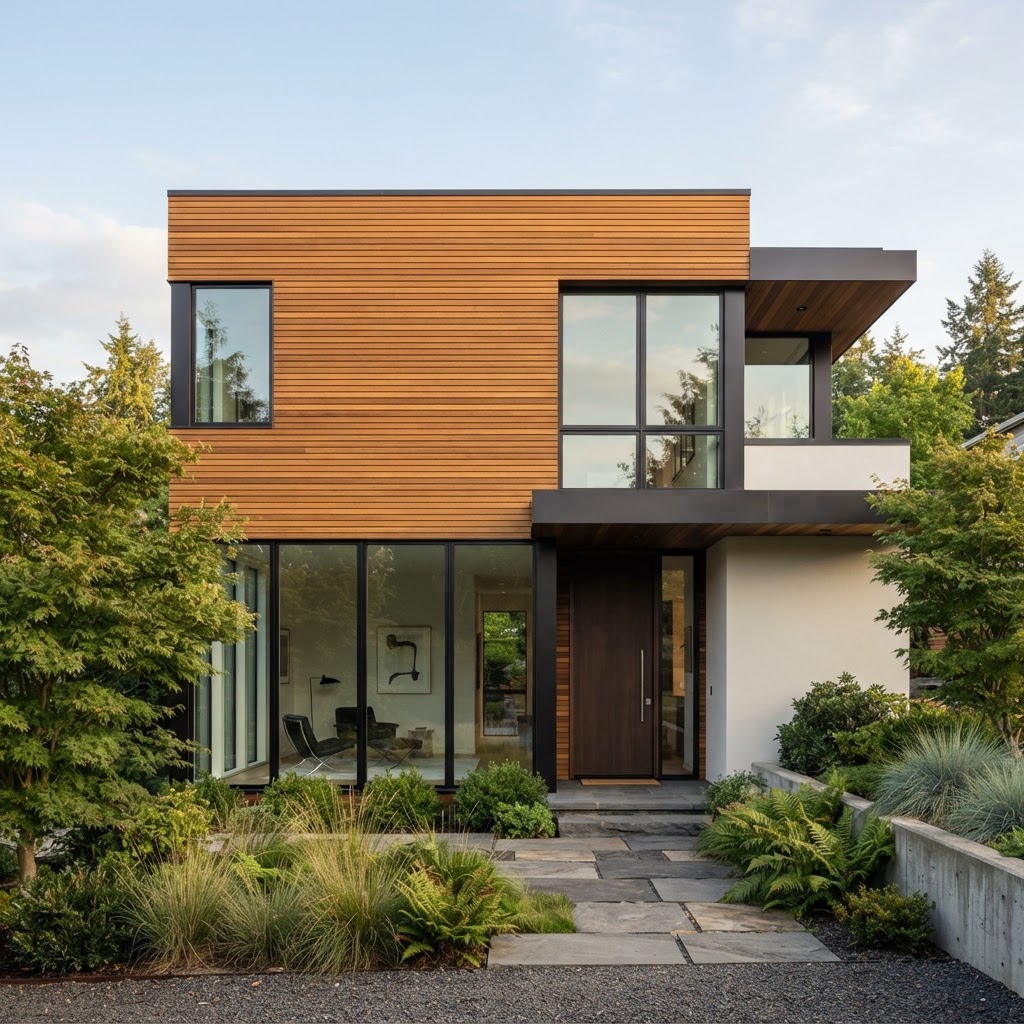
Nickel Gap Siding — Modern Hardwood Cladding with Consistent Reveal
A shiplap variant with a precise ~5/32" gap — the thickness of a US nickel — between every board. Rabbeted edges hide the fasteners and hold a perfectly consistent, modern shadow line across the entire wall.
Available in Ipe, Cumaru, Garapa, Tigerwood, Massaranduba, and Red Balau. Part of our hardwood siding line — custom profiles available.
What Is Nickel Gap Siding?
Nickel gap siding is a refined shiplap profile milled so that installed boards self-space with a uniform gap of roughly 5/32 of an inch — the thickness of a US nickel, which is where the name comes from. The rabbeted (stepped) edges interlock behind the face, concealing the fasteners and guaranteeing the same crisp reveal on every course without spacers or guesswork. Originally an interior accent-wall staple, nickel gap has become one of the most requested exterior profiles for modern facades. Milled in dense tropical hardwoods like Ipe and Cumaru, it delivers that architectural precision with a cladding that outlasts cedar and composite alternatives by decades.
Nickel Gap Profile Design
Profile & Reveal
- ✓ Precise ~5/32" (nickel-thickness) self-spacing gap between boards
- ✓ Rabbeted edges interlock and conceal fasteners completely
- ✓ Dead-consistent reveal across the whole elevation — no spacers needed
- ✓ Narrow shadow line reads clean and modern
Fastening
- • Blind nail or screw through the rabbeted tongue — no visible fasteners
- • Stainless steel trim-head screws or siding nails only
- • Pre-drill every fastener hole at roughly 45°
- • One fastener per stud line, through the tongue only
See our hidden fastener guide and fastening comparison.
Best Applications
- • Modern interiors and accent walls
- • Exterior facades (over a rainscreen)
- • Ceilings and covered porch ceilings
- • Farmhouse-modern and Scandinavian designs
- • Retail and commercial feature walls
Horizontal vs Vertical
Nickel gap installs beautifully both horizontally (classic, wide look) and vertically (tall, architectural look). Vertical installations require horizontal furring strips and a slightly higher waste factor.
Interior vs Exterior Use
For exterior applications, Building Science Corporation recommends weather barriers and drainage planes behind wood cladding systems.
Interior Installations:
- • Focus on visual consistency and finish quality
- • Minimal maintenance requirements
Exterior Installations:
- • Require appropriate weather barriers and drainage
- • Use stainless steel fasteners (316 in coastal areas)
- • May be oiled or left to silver naturally
Shop Nickel Gap by Size & Species
Every combination below opens a live-pricing configurator — pick grade and lengths, see per-foot pricing, and add to cart.
| Size | Ipe | Cumaru | Garapa | Tigerwood | Massaranduba | Red Balau |
|---|---|---|---|---|---|---|
| 1x4 | Shop → | Shop → | Shop → | Shop → | Shop → | Shop → |
| 1x6 | Shop → | Shop → | Shop → | Shop → | Shop → | Shop → |
| 5/4x4 | Shop → | Shop → | Shop → | Shop → | Shop → | Shop → |
| 5/4x6 | Shop → | Shop → | Shop → | Shop → | Shop → | Shop → |
| 1x8 | Shop → | — | — | — | — | — |
| 5/4x8 | Shop → | — | — | — | — | — |
Don't see your size? Custom widths and thicknesses are available through our custom milling services.
Compare Species for Nickel Gap Siding
| Species | Janka | Lifespan | Color | Best For | |
|---|---|---|---|---|---|
| Ipe | 3,680 lbf | 75+ yrs | Deep chocolate brown | Maximum durability, wildfire zones (Class A) | Shop → |
| Cumaru | 3,540 lbf | 50+ yrs | Golden to reddish brown | Best value in a premium hardwood | Shop → |
| Garapa | 1,700 lbf | 30+ yrs | Golden yellow | Bright, budget-friendly cladding | Shop → |
| Tigerwood | 2,160 lbf | 30+ yrs | Striped orange/brown | Dramatic accent walls & facades | Shop → |
| Massaranduba | 3,190 lbf | 50+ yrs | Deep red | Dense, uniform red tones | Shop → |
| Red Balau | 1,600 lbf | 30+ yrs | Reddish brown | Consistent color at a lower price | Shop → |
Waste Factor & Planning
Order 10–15% extra material for cuts and waste. Vertical installations, complex layouts, and elevations with many openings need the higher end of that range. Our siding calculator can help confirm quantities from your square footage.
Frequently Asked Questions
What is nickel gap siding?
Nickel gap is a shiplap-style profile milled to self-space with a consistent ~5/32" gap — the thickness of a US nickel — between boards. Rabbeted edges hide the fasteners and lock in a uniform modern reveal.
How wide is the "nickel gap"?
Approximately 5/32 of an inch — the thickness of a US nickel. The gap is milled into the profile itself, so every joint on the wall is identical without using spacers.
Can nickel gap be used outdoors or is it interior only?
Both. Nickel gap started as an interior profile but performs excellently outdoors in tropical hardwood, provided it is installed over a proper weather barrier and rainscreen with stainless fasteners.
Does nickel gap hardwood need a rainscreen?
For exterior use, yes — a ventilated rainscreen assembly behind the boards is strongly recommended for drainage, airflow, and long-term stability.
What sizes of nickel gap are available in Ipe and Cumaru?
Nickel gap is milled in 1x4, 1x6, 5/4x4, and 5/4x6 in all six species, with 1x8 and 5/4x8 available in Ipe. Custom widths are available through our milling services.
How does nickel gap differ from standard shiplap?
Standard shiplap boards can be installed tight or gapped at the installer’s discretion; nickel gap mills the exact 5/32" spacing into the profile, so the reveal is automatic and perfectly consistent.
Do I need to order extra material?
A waste factor of 10–15% is typically recommended, depending on layout and cut complexity. Vertical installations and complex layouts generally require higher waste factors.
Do I need a weather barrier behind hardwood siding?
Yes. Exterior installations require an appropriate weather-resistive barrier and drainage plane behind the cladding, per building science best practices for wood siding systems.
What grade of fastener should I use?
Stainless steel (304, or 316 in coastal areas) is required for tropical hardwoods. Standard coated fasteners will react with the wood’s natural tannins and stain the boards.
How long should boards acclimate before installation?
Allow boards to acclimate on-site for 7–14 days, stacked with spacers in a covered, ventilated area similar to the installation environment.
Do I need to seal cut ends?
Yes. Seal all field cuts immediately with an end-grain wax sealer to prevent checking and splitting as the board dries.