.png?width=180&quality=75&format=webp)
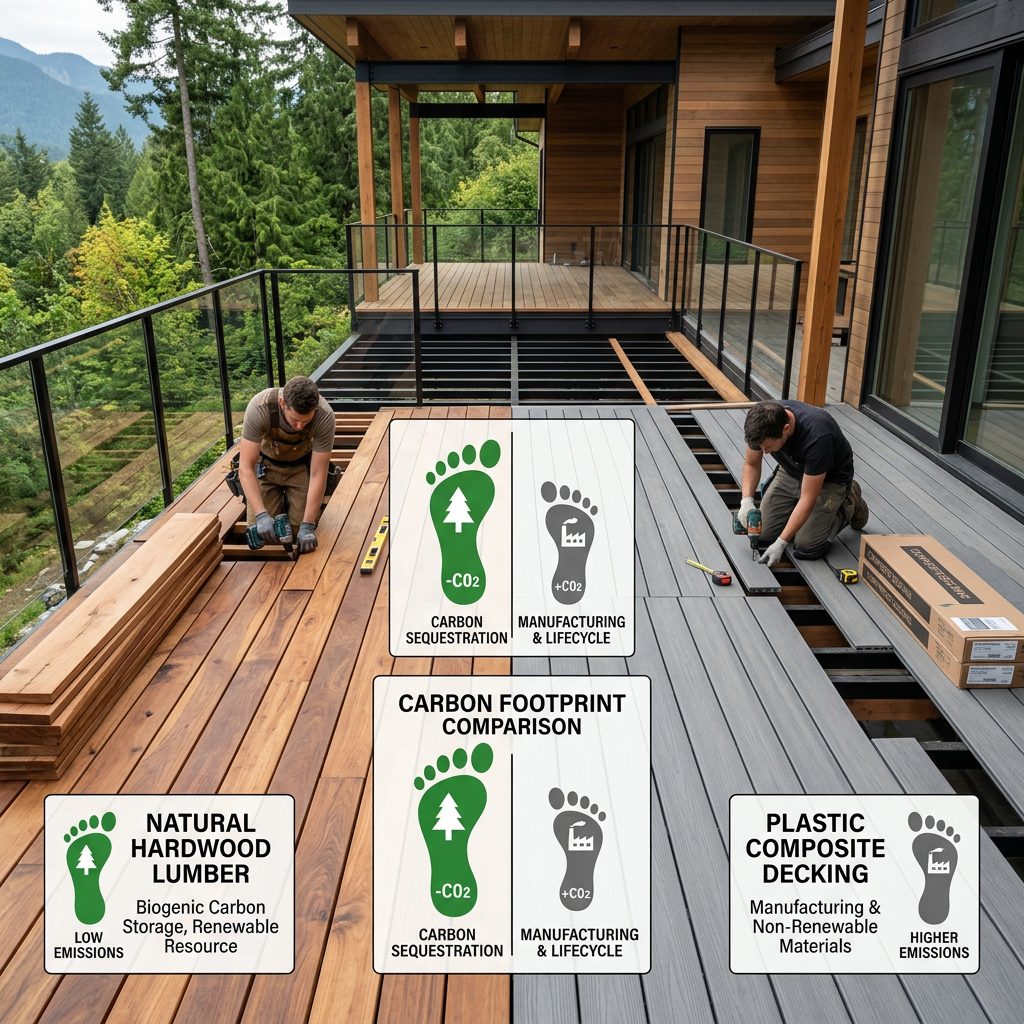
The Carbon Story of Long-Lived Hardwood vs. Short-Lived Plastic Lumber
Explore the environmental impacts of long-lived hardwood versus short-lived plastic lumber. Understand their pros, cons, and the best choices for your projects.
As more homeowners and builders navigate the complexities of sustainable building materials, the debate between long-lived hardwoods and short-lived plastics gains attention. Here, we delve into the carbon story behind Ipe, Cumaru, and other hardwoods versus plastic lumber, providing clarity on their environmental impacts, longevity, and performance.
Quick Summary
- Long-lived hardwoods like Ipe and Cumaru sequester carbon over their lifespan.
- Plastic lumber is made from non-renewable resources and emits more carbon during production.
- Hardwoods offer better aesthetics and long-term durability for outdoor applications.
- Maintenance and initial costs of hardwood can be offset by longevity.
- Understanding installation requirements is essential for maximizing performance.
What It Is / Definitions
Long-Lived Hardwood: Refers to durable hardwood species, such as Ipe, Cumaru, Tigerwood, and Garapa, known for their density, longevity, and natural resistance to decay.
Short-Lived Plastic Lumber: Typically made from recycled polyethylene or polypropylene, plastic lumber is designed to mimic the look of wood while being resistant to moisture and insects but often lacks the same structural integrity and lifespan.
Best Use Cases
- Hardwoods: Ideal for high-traffic areas such as decking, siding, and fencing; they withstand weather elements and provide excellent aesthetics.
- Plastic Lumber: Suitable for low-stress applications like garden furniture or low-maintenance landscaping features but isn't commonly recommended for structural elements that require load-bearing capabilities.
Clear Pros of Long-Lived Hardwood
- Carbon Sequestration: Hardwoods naturally absorb carbon dioxide from the atmosphere as they grow, with their dense structure allowing them to store carbon efficiently for decades after being harvested.
- Aesthetics: The natural beauty and rich character found in hardwoods are unmatched, adding a warm ambiance to outdoor spaces.
- Durability: Species like Ipe can last over 25 years, significantly outperforming most types of plastic lumber, which typically show signs of degradation much earlier.
- Sustainability: When sourced from sustainably managed forests, hardwoods can be a renewable resource that benefits the environment without compromising quality.
Clear Cons and Limitations
- Cost: Initial costs for hardwoods may be higher than plastic lumber; however, the total cost of ownership may favor hardwoods due to their durability.
- Maintenance: Hardwoods require periodic sealing and maintenance to retain their color and structural integrity, unlike plastic lumber which is virtually maintenance-free.
- Installation Requirements: Proper installation is crucial to ensure ventilation and minimize moisture build-up, particularly for tongue & groove porch flooring (covered use only).
Installation Considerations
- Ensure proper joist spacing to accommodate the weight and flexibility of hardwood decking.
- Use stainless steel fasteners to prevent corrosion on metal components when installing square edge boards.
- Consider using grooves for hidden fastener systems, making installation easier while enhancing the decking's aesthetic appeal.
Common Mistakes and How to Avoid Them
- Improper Spacing: Always check local building codes to ensure spacing is adequate for your region’s climate.
- Using Inappropriate Fasteners: Stainless steel or an approved type of fastener is crucial to avoid rust stains on hardwoods.
- Not Allowing for Expansion & Contraction: Hardwoods expand and contract with temperature changes, so be mindful of your installation layout.
Cost Considerations
While hardwoods have a higher upfront cost, their lifespan and low maintenance needs can translate into lower long-term expenses. In contrast, plastic may seem cost-effective initially but may need replacing sooner.
Maintenance and Longevity
Hardwoods typically last 25 years or longer with proper care. Regular staining and sealing help protect against UV damage and moisture infiltration. In contrast, plastic often degrades in color and strength over time and can become brittle, needing earlier replacement.
Real-World Recommendations
At Ipe Woods USA, we advocate using Ipe for decking applications due to its remarkable stability, resistance to moisture, and longevity. For siding, consider using Cumaru or Garapa for a beautiful aesthetic with excellent durability.
FAQ Section
-
How do hardwoods compare to plastic lumber in terms of environmental impact?
Hardwood lumber, when sourced sustainably, helps sequester carbon over its lifespan, unlike plastic which has higher carbon emissions during production. -
What is the lifespan of hardwood decking compared to plastic lumber?
High-quality hardwoods like Ipe can last 25 years or more, while plastic lumber may need replacement after 10-15 years depending on usage. -
Is plastic lumber maintenance-free?
While plastic lumber requires less frequent care compared to hardwoods, it still may need cleaning to maintain its appearance. -
Can I use hardwoods in all climates?
Most hardwoods perform well in varying climates, but local moisture levels may require specific installation techniques. Always consult local building codes.
Keep Your Deck Looking Its Best
Shop our recommended oils, cleaners, and finishing products for hardwood deck care.