.png?width=180&quality=75&format=webp)
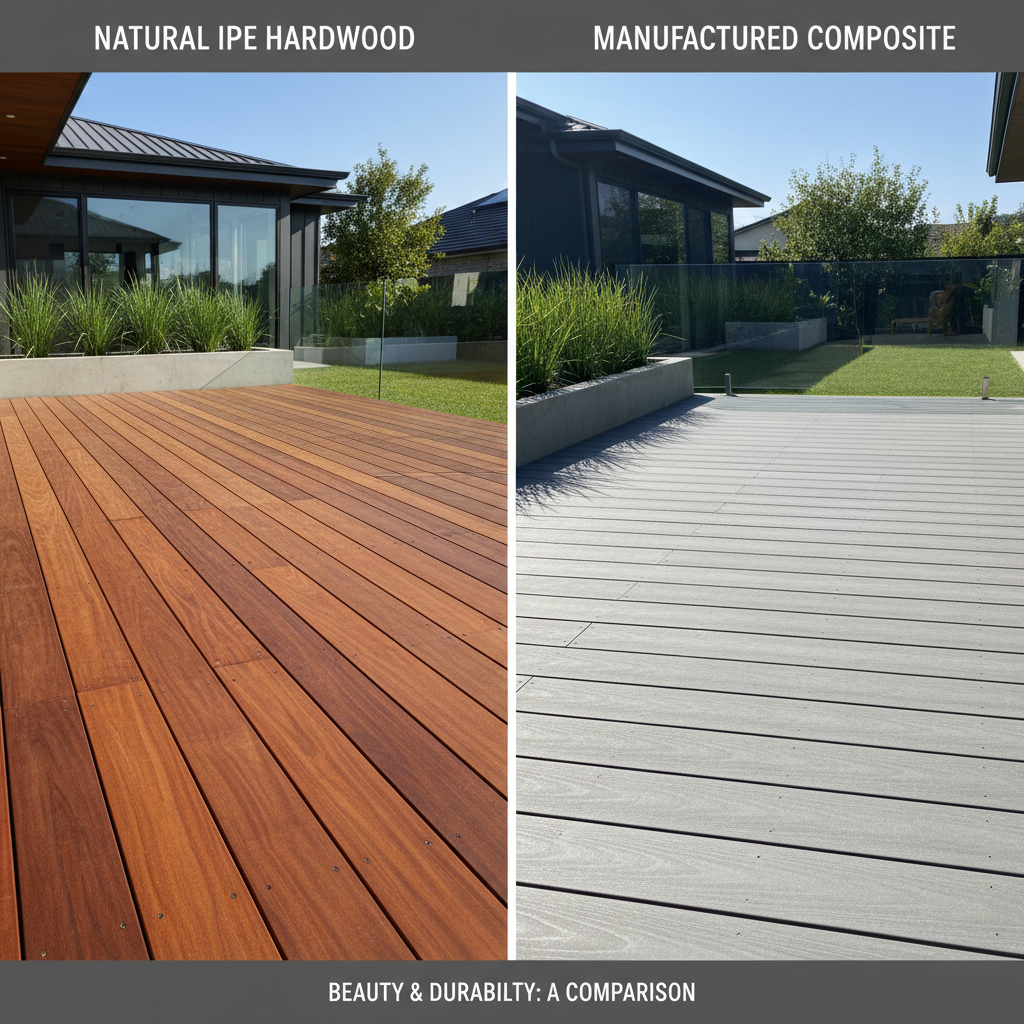
Ipe Wood vs Composite Decking Long-Term Investment Comparison
Compare ipe wood and composite decking in this comprehensive long-term investment guide. Understand longevity, maintenance requirements, costs, and more.
When it comes to choosing decking materials for your outdoor project, you may find yourself weighing the benefits of ipe wood versus composite decking. Both options have unique attributes and can perform well over time, but they significantly differ in longevity, maintenance, and overall value. This article will provide a comprehensive comparison of ipe wood and composite decking to help you make an informed decision for your long-term investment.
Quick Summary
- Durability: Ipe wood typically lasts over 25 years; composite requires replacement every 10-15 years.
- Maintenance: Ipe wood requires oiling; composite involves cleaning but is lower maintenance overall.
- Aesthetic Appeal: Ipe offers a natural beauty that many homeowners prefer, while composite can resemble wood but lacks the same depth.
- Cost: Ipe wood has a higher upfront cost but can be more economical long-term.
- Environmental Impact: Composite decking made from recycled materials often touted as eco-friendly, while ipe comes from sustainable sources if harvested responsibly.
What is Ipe Wood and Composite Decking?
Ipe wood, often sourced from South America, is a dense, tropical hardwood known for its exceptional durability and natural resistance to termites, rot, and decay. Typically used in various applications, including decking, siding, and fencing, its strength and beauty make it a popular choice for outdoor spaces.
Composite decking, on the other hand, is made from a blend of wood fibers and recycled plastic. The material is designed to mimic the appearance of real wood while offering improved durability and lower maintenance requirements. Each type of composite decking varies in quality, but they are generally more affordable than ipe wood.
Best Use Cases
- Ipe Wood:
- High-end residential projects
- Areas with extreme weather (sun, snow, or humidity)
- Settings where appearance and natural beauty are priorities
- Composite Decking:
- Budget-friendly projects
- Residential properties with moderate use
- Environments where moisture or rot may be a concern
Pros of Ipe Wood
- Longevity: Ipe wood can last 25 years or more when properly maintained.
- Natural Resistance: It is naturally resistant to pests, mold, and moisture damage.
- Aesthetic Appeal: Ipe boasts rich grain patterns and deep colors that improve with age.
- Strength: It is one of the strongest woods available, making it highly resilient to wear and tear.
- Sustainability: When sourced responsibly, ipe wood can be a sustainable choice due to its availability as a renewable resource.
Cons and Limitations of Ipe Wood
- Cost: Ipe wood has a higher initial cost than composite alternatives.
- Maintenance: Requires regular oiling to maintain its color; otherwise, it can weather to a silver-gray tone.
- Weight: More challenging to handle and install due to its dense nature.
- Slipperiness: Traditionally, it can be slippery when wet unless treated appropriately.
Pros of Composite Decking
- Low Maintenance: Does not require staining or sealing and is easier to clean.
- Affordability: Generally cheaper upfront compared to ipe wood.
- Consistent Appearance: Available in various colors and styles, providing a uniform look with less variation.
- Eco-Friendly Options: Some products are made from recycled materials, appealing to environmentally conscious consumers.
Cons of Composite Decking
- Durability Limitations: Typically lasts only 10-15 years, requiring replacement sooner.
- Aesthetic Limitations: While it resembles wood, many still find its texture and appearance inferior.
- Temperature Sensitivity: Composite can get extremely hot under direct sunlight, potentially making it uncomfortable for foot traffic on hot days.
- Mold Growth: May encourage mold growth if not cleaned regularly.
Installation Considerations
When comparing ipe wood to composite decking, installation involves several factors:
- Ipe Wood: Ideal spacing of joists is crucial. It requires specific fasteners to maintain its strength, often using square edge boards (face-screwed) or grooved boards (hidden fasteners). Proper acclimatization of the wood before installation is also important to prevent warping.
- Composite Decking: Generally easier to install due to lighter weight and consistent sizing. Many brands include systems that assist with hidden fastening.
Common Mistakes and How to Avoid Them
- Ignoring Local Climate: Always consider your local weather conditions. Ipe performs well in various climates, while some composites may not.
- Choosing Incorrect Fasteners: Use stainless steel or brass fasteners to prevent staining with ipe wood. Composite usually requires specific fasteners from the manufacturer.
- Inadequate Joist Spacing: Follow the manufacturer's recommendations for maximum joist spacing to prevent sagging, particularly with composite materials.
- Forgetting Maintenance: Ipe requires ongoing maintenance to retain its luster; neglecting this leads to rapid weathering.
Cost Considerations
Ipe wood generally costs more than composite decking upfront, ranging from $3 to $8 per board foot, depending on the grade and supplier. Composite decking prices can range from $2 to $5 per square foot. However, when considering longevity and maintenance costs, many homeowners and builders find that ipe wood proves to be a more cost-effective option over the long-term due to its durability and lower replacement frequency.
Maintenance and Longevity
While both materials require some maintenance, they differ significantly:
- Ipe: Should be oiled annually to maintain its color. If untreated, it will weather to a gray hue, which some clients prefer. Regular cleaning using a soft brush and mild soap can also prolong its life.
- Composite: Requires periodic cleaning to prevent dirt and mold build-up; typically, a simple power wash can suffice.
Real-World Recommendations
From extensive experience working with hardwood decking, we recommend considering both short-term and long-term aspects:
- If you prioritize natural beauty and are willing to invest more upfront, choose ipe wood. It withstands the test of time beautifully.
- For projects on a budget or with lower traffic requirements, composite decking may present a reasonable and practical option.
FAQ
- How long does ipe wood last compared to composite decking?
Ipe wood typically lasts over 25 years with proper care, while composite decking ranges from 10-15 years. - Is ipe wood more expensive than composite decking?
Yes, ipe wood generally has a higher initial cost; however, it can be more economical over time due to its durability. - What maintenance do Ipe and composites require?
Ipe wood needs annual oiling and regular cleaning, while composite decking primarily needs periodic cleaning to avoid mold. - Which decking material is better for hot climates?
Ipe wood is better due to its ability to handle extreme temperatures without warping.
Compare Your Options
See how different hardwood species and materials stack up for your specific needs.